What Are We Mad about This Week?

2016-07-Life-of-Pix-free-stock-man-aged-bar-MAXMARTIN

I have been taking the weekends off from Facebook, and something strange has been happening on Monday morning. Feeling like Rip Van Winkle, I open up Facebook and review the news from the weekend. I catch myself wondering what people are angry about this week.

It’s strange to feel so detached from the passionate debates of the past two days.

Of course there are many things that we can legitimately become angry about. The world is rife with injustice. I’m not doubting these things or suggesting that we embrace complacency.

Rather, I’ve been noticing that the daily use of Facebook can lead my mind into a kind of ongoing angst and anger, if not a sense of anxiety. In light of the injustices and problems in our world, I’m concerned that despite the benefits of awareness that comes through Facebook, it’s also creating a mindset of anger and anxiety that leaves me unable to thoughtfully engage the problems of our world in a constructive manner, let alone the people who disagree with my perspective.

I will never doubt that Facebook has been a great tool for sharing worthwhile causes and events. Heck, even the much-derided ALS Ice Bucket Challenge led to major research innovations and potential breakthroughs. I follow causes such as the Preemptive Love Coalition primarily through their Facebook page. Social media can do more than raise awareness for a cause—it can help us take organized action.

However, social media isn’t as great for fostering empathy, hosting complex, nuanced conversations, or creating a mindset that can take measured steps toward solutions. It’s so very easy to assume the worst about others, to lament what “those idiots” think, and to demonize people who post smug memes mocking what I hold dear. More to the point, I’m sure I’ve done all of these things to others plenty of times as well.

I am committed to being constructive, redemptive, and action-oriented within my resources. I don’t want to go through my life critiquing and criticizing others without ever getting involved in a cause. In fact, for many years I’d been involved in prison ministry, and I immediately noticed that I wrote with far more snark and divisiveness online compared to the way I reached out to the men in prison. I wanted my in-person words to guide my online words.

This brings me back to the weekend breaks I’ve been taking from Facebook (and all other social media channels). I don’t know how long I’ll keep this up, but I feel the acute need to know what I am like without any social media interactions. I need to feel the gnawing desire to check in and to ask what’s driving that and whether that’s a good thing or a bad thing. The more I’m driven to check in, the more I need to examine that drive and where it’s coming from.

I need solitude each day, and a big part of creating that space means learning to cut myself off from distractions and time wasting activities that eat up precious blocks of five, ten, or fifteen minutes.

I need solitude in order to hear the still, small voice of God.

I need solitude in order to recognize when my mind is spinning off track into anger, fear, and frustration.

Rage can become a lifestyle, a habit that we cultivate by constantly feeding it tidbits of injustice and fear from our circles and from the news cycle. In fact, news outlets and social media sites have every incentive in the world to push outrageous events into our faces. That isn’t to say there aren’t journalists doing good and essential work. Rather, the people running these companies need to attract viewers in order to maximize profits, and rage works.

The worst part about today’s outrage culture is that we need solitude in order to actually address it, but we’ll no doubt hear guilt trips that we’re putting our heads in the sand or acting irresponsibly if we disconnect for an extended period of time. The pursuit of an actual solution appears to be just another part of the problem.

Activists and saints surely figured out ways to address injustice before social media, and I trust that a bit more mindfulness and consideration about the way forward will help us take better steps forward together.

I care deeply about the injustice that America has inflicted on the Middle East (see the Preemptive Love Coalition for more ways you can help the most desperate refugees today). I think often about our criminal justice system, and I still associate names and faces with sentencing laws and parole policies. I very much want to stay engaged. I want to feel the anger of the injustices people continue to suffer. I can use Facebook to raise awareness about these issues, but I need something more than rage.

I need the focus and direction that comes from silence and contemplative prayer.

I need a still small voice to speak in the midst of the storm, or I’ll most likely become just another voice in the storm.

My Most Difficult Shift Toward Healthy Religion


2015-04-Life-of-Pix-free-stock-photos-wall-walking-man-industrial-leeroy.jpg

When I finally understood the impact of unhealthy religious beliefs and practices in my life, I don’t think I can quite put into words the joy and freedom that I experienced. It was one epiphany after another where God wasn’t as evil and monstrous as I’d been lead to believe. My beliefs weren’t as fragile as I’d been taught.

Rather than watering down the truth or picking and choosing my truth arbitrarily, I learned to begin taking in the full, mysterious witness of the Christian faith where God is just and holy, but God is also merciful, loving, and compassionate.

If only I’d expended the same effort to experience the love of God as I’d invested in fearing his judgment and holiness.

It’s as if a whole segment of Christianity has become so fearful of God’s judgment that we’ve become fixated on it. We dare not spend too much time talking about God’s love, mercy, or compassion, even if the Psalms, prophets, and writings of the apostles all but hit us over the head with these themes about God’s love and patience.

If we start to think God is soft or easy on us, we could start sinning, and then who knows what would happen next.

Actually, we’ve been told what to expect next: judgment.

Is it any wonder that people who spend so much time beholding and fearing the judgment of God feel an irresistible pull toward judgment of others as well? We become what we worship, that’s what the Psalms and prophets tell us in particular, and if we fail to see how God’s love coexists with his holiness and justice, then we end up with a God of judgment and we can’t help but follow that lead.

Seeking the full witness of scripture about the love, mercy, and compassion of God for us has completely changed how I pray and practice holiness. Rather than acting out of a fear of judgment, I’m working on accepting the loving embrace of God for prodigals who cross the line and stuffy judgmental sons who walk the line. The contemplative prayer tradition of the church tells us over and over again that it’s the present love of God that transforms us, not a constant fear of his judgment.

As much as I have enjoyed this shift toward “healthy religion,” as Richard Rohr would call it (rather than creating a false dichotomy between Jesus and religion), the most difficult step for me has been to respond with mercy, love, and compassion toward those who are still under the sway of an angry, judgmental God who demands holiness. As I step toward mystery and contemplation, I struggle to respond with grace and compassion toward those who are still citing chapter and verse with angry zeal, defending boundaries, and attempting to define who is in and who is out.

I’m grateful in part for this struggle. I need these reminders of how far I need to go. You’d think that I should know by now that having the right information about the love of God isn’t the same thing as living in that love daily and being transformed by it.

When someone takes a swing at my beliefs or practices, I still feel the urge to judge, excommunicate, or strike back. I still want to repay snark with snark, sarcasm with better sarcasm. And it’s killing me sometimes because I love sarcasm so much.

Most days I can only know on an intellectual level that the people who embody the judgment, boundary-defending side of Christianity are in bondage to a flawed perception of God. And the more that I want to respond in kind, the more I’m in bondage to that flawed perception as well. At the very least, if I struggle to respond with compassion and mercy, then I’m not doing a good job of experiencing God’s mercy and compassion for myself.

It’s hard to learn to shut up and to take a shot on the chin. I’ve invested so much time (and money!) in studying theology. It’s ironic that I want to put my hard-earned training into use to strike back at someone, but the truth is that I need nothing more than to shut up and return to the present love of God.

It shouldn’t be this hard to rest in the present love of God. The more I struggle with this, the more I have to question what I want out of life. Do I want to be justified? Do I want people to respect me? Do I want people to think I’m clever?

It sure doesn’t sound all that clever or unique to say that I am loved and you are loved deeply, perfectly, and constantly. That’s what Christians have been saying for centuries. It’s not flashy, snarky, or catchy for a blog headline. It won’t win a theology debate. It will actually look like a surrender.

Surrender. That’s the word that I’m learning to accept. If I am going to surrender to the love of God, it also means surrendering in every other competition, debate, and desire. I can’t win. I can’t reach what I think I want.

Jesus taught us what it means to surrender and to “win” by “losing.” He modeled this kind of surrender in the most extreme of circumstances, entrusting himself to the love of God even to the point of trusting in resurrection.

Can I let God’s love so transform me that I can even show his love, mercy, and compassion to those who have none for me?

Can I surrender to the point that I’ll let my aspirations for my reputation perish? Perhaps one day I’ll trust God to raise up my true self from the ashes, refined and secure in his love that conquers all.


Do You Want to be Made Well? Probably Not

20160318-barnimages-igor-trepeshchenok-03-768x514

“Do you want to be made well?”
 – John 5:6

That’s the question Jesus asked a blind and paralyzed man. The man was so focused on his own plans and solutions to his hopeless problems that he never even answered Jesus’ question. Perhaps that non-answer was answer enough.

It’s a good thing that Jesus wasn’t picky about his answer. I can relate to this man. Who hasn’t been so fixated on the solutions that work for everyone else? Who hasn’t looked at his own faltering plans and doubled down, trying to make them work?

There’s an even deeper issue at play, at least for me:

Honestly, I don’t want to be made well. Too often I choose to limp along or to stick with my comfortable half measures that make life tolerable. Actually moving into a place where I could thrive and experience renewal takes sacrifices, discipline, and, most importantly, hope.

Do I believe that God can make me well?

Do I believe that God offers something better than what I already have?

Do I believe that reaching out to God will change anything?

Who wants to make time for God if there isn’t a guarantee that prayer will “work” or that God can offer something better than what I already have?

Here is what I’m learning: I settle for far too little, far too quickly, far too often.

The first step you take is often the hardest because you don’t have hope or experience to fall back on. Beginning with prayer is the great unknown. Where is this going? Who knows?

I have learned that Jesus promises “Seek and you shall find,” but he doesn’t offer a lot of details about what exactly we’ll find. We’re seeking the treasure of the Kingdom, but we only have this guarantee: “You’ll know it when you find it.”

Who knows when you’ll find it.

Do you want to be made well?

Yes and no.

I want to be made well, but only if it’s easy and doesn’t cost much. I want to be made well if I can understand and, ideally, control the process. I want to be made well only if I’ve seen the solution work for other people so that I can imitate them.

The hardest thing about spirituality for me, and I suspect many Protestants, is grasping the amount of effort and will power it takes to daily surrender to the love and power of God. The life-change and healing we seek is 100% from God, but it takes everything we’ve got just to surrender and to trust completely. It takes so much effort to bring ourselves to the place where only God can work to heal us.

Healing will never come from our own plans, methods, and “medications.” We can choose to limp along with sleeping pills, wine, recreational drugs, consumerism, or sexual indulgences. We can choose to run from the pain of the past, the anxiety of the present, and the terror of the future. There’s no escape that we can engineer on our own. There’s no way to medicate this pain long enough. There’s no healing that we can engineer on our own that replaces the healing power of God’s loving presence.

As a new struggle, source of pain, or wound emerges in my life, I ask God yet again, “This too, Lord? Must I bring this to you, completely out in the open with a blind faith that you can heal this?”

Surrender is a life-long and daily struggle.

There’s no guarantee about what follows after the surrender, what the healing will be, or how long it will take. There’s no guarantee for anything other than the hope I can gather from past experiences and the experiences of others (including the stories of scripture).

Each time I bring my wounds and limps to the Lord, I find that it’s only through this bracing vulnerability and faith that I can find healing. It’s only through doggedly fighting to make space in my mind and in my day for God that I can expect to be made well.

Do I want to be made well?

Do I want to make time to be made well?

Do I want to make time to hear the voice of God?

Do I want to make space in my life for God’s presence?

Or do I want to keep limping along, hiding my pain and medicating it with the imperfect medications on hand?

You can be made well. I can be made well. I suspect that we can’t even imagine what God has in store for us. That may be the greatest challenge we face when it comes to answering Jesus’ question. Only Jesus himself knows how badly we need to be healed, and that’s why he isn’t picky about how we answer his question.

Whether we struggle with vulnerability or surrender, God’s mercy is more than enough to meet our great needs and weaknesses, even when we can’t manage to say one simple word: “Help.”


Read More about Contemplative Prayer…

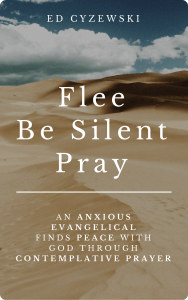
After years of anxious, hard-working spirituality, I found peace with God by practicing contemplative prayer. I’ve written an introduction to this historic Christian practice titled:

Flee, Be Silent, Pray:
Ancient Prayers for Anxious Christians

On sale for $9.99 (Kindle)

Amazon | Herald Press | CBD

FBSP blog footer

I Resisted Winter and Missed the Renewal of Spring

The Contemplative Writer Twitter header.jpg

The kale we planted in the garden last spring grew into thick stalks all summer and kept our table supplied with greens. By fall the kale stalks were curling and falling all over themselves. Their leaves, which had been full, crisp, and green throughout summer started wilting, turned shades of brown and yellow, and finally succumbed to the constant attacks of tiny pests. By the time the cold winds of November swept the final leaves off the trees, our kale plants were little more than battered stalks with tiny bits of green poking out here and there. Yes, they were just barely alive, but they were far from healthy.

I don’t know why I waited so long to pull out the old kale. Maybe I was hoping that it would survive the winter and sprout new life in the Spring. I left it hanging limp and lifeless all winter. By the time the snow melted, the kale had all but rotted away.

As soon as the weather grew warm, I finally gave in and yanked the old kale stalks out of the garden. I poured new compost into the beds and raked it smooth. A few weeks later I scattered a new crop of kale and lettuce seeds into the orderly garden beds.

The new kale is going to take some time before it’s ready to eat, but I couldn’t hold onto last year’s planting. It had to go in order to make room for what’s next.

How long have I tried clinging to last year’s planting and held up the new things that must take their place?

I have been longing for the new thing, but have continued to cling to what is old.

I have become withered and overgrown, bitter and stagnant, but then I wonder why the new life hasn’t taken root and grown yet.

This week I had a chance to finally pull some old roots up as I make space for a new venture. The “Revert to Author” notice arrived for my first book that I wrote about theology. At the time I was one of many writers trying to sort out Christian theology and whether my faith could survive without the promise of certainty. Some are still wrestling with that question, some have moved on with their faith, and some needed to leave their faith behind. I have moved on with my faith, realizing that I didn’t need an airtight theology in order to have a relationship with a God whose top concern is love.

As I set aside my identity as a writer about theology and culture, I felt both a relief and a fear of what’s next. The fear of “what’s next” is why we often cling to what’s old and dying. We can’t imagine that something better is possible.

I made the mistake of thinking: Better to stick with the broken thing we understand than the new blessing we can’t fathom.

The same day that I signed my agreement to revert the rights of my theology book back to myself, I also continued to work on plans to launch a new website: www.thecontemplativewriter.com. This is a project that has been in the works for a long time, but I just didn’t see how to move forward with it. I kept plodding along with what I knew about theology, uncertain about what would grow if I pulled everything up and started all over.

I finally started planting new things a few years ago when I took a break from blogging about theology and then released Pray, Write, Grow: Cultivating Prayer and Writing Together. Since then, each step toward prayer and writing, or writing about prayer, has been affirming and life-giving.

It was a long winter, but I now see that I needed the winter. I needed a winter to kill what was no longer productive or life-giving. I needed winter to force me to uproot the past and to make room for what’s next.

Shifting to writing about prayer feels like the beginning of Spring. There is new life to this direction, and I’m finally realizing how I’ve held myself back by failing to uproot what I planted last season.

How many of us go into winter kicking and screaming, lamenting the loss of summer’s warmth and the brilliant colors of the fall because we lack hope for the future?

Perhaps fighting winter is a good sign at times. Perhaps we rightly see the good that we’ve had. I’m grateful for all that I’ve accomplished and learned from that last season. In fact, the things I’m planting today are benefitting from what I planted before.

For this new season, I need to keep writing on this website with longer form posts about prayer, writing, and Christianity, but I’m also making a new space for brief, daily posts about contemplative prayer. The site officially launches April 2nd and begins with regular daily posts (not Sundays) on Monday, April 4th.

My new site, The Contemplative Writer, will offer daily posts that provide guidance for daily prayer, Christian spiritual practices, and sources for meditation and contemplation. You can sign up to receive posts via email, the weekly email with highlights and a custom Examen, or follow through the RSS feed. In the coming month I hope to add more spiritual direction topics and a podcast version of the newsletter.

This website is what I’ve needed in my own life. It’s my hope that my own imperfect journey toward prayer and the wisdom of others will prove beneficial for you as well.

Visit The Contemplative Writer today.


Does Christian Spirituality Boil Down to These Two Questions?


planner-time-for-prayer

Christian spirituality often boils down to two questions: Do I have time? Will this work?

You could say these are chicken and egg questions. If prayer works, you’ll find the time for it. If you don’t find the time for prayer, it won’t work. If prayer doesn’t seem to work, you won’t find the time for it.

Find the time for prayer, and it will work… eventually.

This is why it has helped to compare the ways that the reflection of prayer resembles the reflection that goes into writing. The two use many of the same practices and mindsets. If I struggle at one, there’s a good chance I’m struggling at the other. My failures and breakthroughs in writing have helped me understand my failures and breakthroughs in prayer.

Writing is a lot like prayer since everyone thinks they can write, just as everyone thinks they should be able to pray. However, both require learning some basic disciplines, mindsets, and practices in order to make them more likely and more fruitful. True, anyone can and should pray. Anyone can and should write. However, just sitting down to write can be extremely frustrating. The same goes for just sitting down to pray.

Disciplines, structure, and the wisdom of those who have gone before us provide a framework that helps us stand. We learn within the security of these structures and disciplines. What we learn from others we imitate clumsily at first. Over time we find our own way forward.

In the case of writing, I’ve faced these questions about whether I have the time and whether writing will “work.” I’ve found that I had to spend years making time for writing, prioritizing it, learning from experts, imitating the masters, and failing a lot. The progress was slow and incremental.

We can find time for just about anything if we make it a priority. I have learned that prioritizing things like prayer, exercise, and writing means I have to really plan ahead during the day for things like:

  • When will I do the dishes?
  • When will I fold the laundry and put it away?
  • When will I sleep and when will I wake up?
  • How will I keep myself from wasting time on social media?
  • How will I focus on my work?
  • Some days go better than others with all of these tasks!

If I want to make the most of my writing time, I need to invest in things like:

  • Reading constructive books.
  • Free writing when I have a moment.
  • Jotting down ideas in a notebook or phone.
  • Practicing and stretching myself with new projects.

My growth as a writer is a lot like prayer in that I need to learn the disciplines of prayer, learn from people who have greater experience in prayer, and practice using them. Just trying prayer out a few times won’t give you a clear sense of whether it will work. It’s a long term discipline that you develop over time.

Will prayer work? Only if I make the time for it.

Can I find time for prayer? I can, but I’ll be more likely to do so once I see that it works.

If you’re uncertain, discouraged, or leaning heavily toward doubt right now, I trust that prayer is hard to attempt. Where do you begin if prayer has been a source of frustration?

I’ve learned that I need to begin with making time to practice and learning what I can.

We’re left with faith, believing that God is present already and that the greatest barrier in prayer isn’t coming from God’s end of things but rather training ourselves to become aware of God. We can step forward into prayer believing that those who seek will find. Mind you, we don’t know what exactly we’ll find when we seek. We can’t control the timeline of our seeking.

We can only control our schedules and what we believe about God: that God is present, that God is seeking us, and that the simple desire to pray is enough to begin making time for prayer.


Read more about the basics of contemplative prayer and Christian spirituality in my latest book:

Flee, Be Silent, Pray: An Anxious Evangelical Finds Peace with God through Contemplative Prayer

On sale for $2.99

Amazon Kindle | Amazon print | Kobo | B&N


Jesus Wasn’t a Monk but He Kind of Was


cave-prayer-contemplative-monk

Allow me to reveal just how Protestant I am. I’ve studied the Gospels closely and intensely for the majority of my life, but I rarely made any connections between Jesus and monks, starting with the fourth century desert fathers, right on through the present day. Jesus was out in the public eye preaching sermons and discipling people, right?

When I became more charismatic, I started tacking on “healing people” to Jesus’ list of activities.

What could Jesus possibly have in common with monks who hid in the desert, took vows of silence, and wove baskets or brewed beer (depending on the century) in their free time?

Sure, Jesus went off to pray in the desert for 40 days…

Sure, Jesus spent entire evenings praying…

Sure, Jesus had a vision of God while praying on a quiet mountain side…

Sure, Jesus got baptized in the wilderness and heard God call him his “beloved son”…

Sure, Jesus prayed fervently and personally with God during his most difficult moments…

Sure, Jesus told his followers to pray in the quiet and privacy of their own rooms…

Wait, that’s starting to sound a bit like a monk.

Mind you, there are all sorts of monks. Some are more chatty, some are more handy, some are more interested in preaching, and some are more interested in preserving the quiet, contemplative prayer practices that have been passed down by the historic church. I can’t imagine any Protestants saying that Jesus was particularly “monastic” in his practices or his ministry. I can, nevertheless, see the common threads between Jesus and the monks. They make a lot more sense when I start looking at the ministry of Jesus.

Jesus was kind of like a monk.

The monks also make a lot more sense when I remember that they were a reform movement in the line of a long history of reform movements that took to the desert and wilderness. When the prophets called Israel back to God, they often hung out in the wilderness. When John the Baptist began preaching about repentance… wilderness. When Paul needed to figure out the Messiah in light of Jesus… wilderness.

As Christianity rose in prominence, the monks recognized that the empire’s power and the influence of the clergy could become extremely toxic. They also fled the pleasures of the city, and even if Protestants would like to critique some of their negative associations with the body (Hello there, early church cultural captivity to Platonic philosophy!), we can sort of get it today. They wanted to remove as many distractions from the pursuit of God, and as Christianity grew in power and influence, they also wanted to avoid the temptations of church-based power.

Jesus didn’t go to the extreme of hanging out in a cave 24/7, but the more we look at the way he rejected the power centers of Judaism and any kind of official position within the religious hierarchy of his day, the more he looks like a monk.

The monks became a kind of expression of the Christian faith in a particular time and place, so the continuity and differences shouldn’t surprise us. Just as Jesus heard the voice of God loud and clear alongside a lonely river or atop a deserted mountain, the monks actively sought to hear the voice of God by pursuing solitude rigorously. Just as Jesus battled Satan during his 40 days in the wilderness, we have many reports of visitors to the cells of monks hearing them arguing with demons.

As a Protestant, I have long considered the monks a different class of Christian. Not necessarily a “higher” class (Hey, I AM Protestant after all), just a different class. They did spiritual stuff and experienced God in ways that I’ll simply never touch, right?

As a follower of Jesus, I continue to face the possibility that he was more like the monks than he resembles a lay person like me. He routinely sought quiet moments alone with God and even made great sacrifices in order to make it happen. Jesus modeled the daily pursuit of God within ministry, and he knew deep down to this core that he was God’s beloved Son, a Son that pleased God the Father.

The monks set off to their cloisters in order to uncover this mystery for themselves. How could the God of the universe love them so deeply and fully? They dropped everything in order to find out. They were so committed to this pursuit of God’s love that they didn’t want to risk confusing the praise of church leaders with the acceptance of God.

I’m still a Protestant, but I’m one of the growing number of Protestants who recognize that the spiritual practices of monks are deep, true, effective, and needed. The monks know a great deal about the presence and absence of God, the intimacy of Christ, and the ways that daily attentiveness to the pursuit of God can reorient our lives in ways that we can hardly touch through hours of diligent Bible study and historical-critical exegesis.

I’m not a monk, but I kind of want to pray like one because the monks were kind of like Jesus.


Read More about Contemplative Prayer…

After years of anxious, hard-working spirituality, I found peace with God by practicing contemplative prayer. I’ve written an introduction to this historic Christian practice titled:

Flee, Be Silent, Pray:
Ancient Prayers for Anxious Christians

On sale for $9.99 (Kindle)

Amazon | Herald Press | CBD

FBSP blog footer

I Tried Quiet Prayer Once and It Didn’t Work

waiting-for-my-plane-1480605-640x480

How many things in life work great the first time around?

Is there anyone who can just pick up a worthwhile discipline or skill after reading a book and trying it once?

Can you learn to paint, knit, sew, or cook with one shot?

Can you remember the first time you tried to ride a bike? I was taking spills all over the school yard for weeks until I caught on and learned how to balance myself. I eventually spent hours riding down a small hill that would have been terrifying at first.

This past summer I started running regularly. I had been somewhat active in the winter by taking the occasional long walk, but running was a different animal altogether.

I huffed and puffed, forcing my aching legs to keep going a little further before taking a walking break. My runs were something like 60% slogging along and 40% walking at first. I eventually started to run a little bit more evenly and started eliminating the walking breaks.

At a certain point around the middle of the summer, I realized that the first 25% of the run will just be miserable. I’ll start to find my stride about the mid-way point, and then the last 25% will require a bit of intention to keep my pace.

Finally, this September, I started to feel strong and confident during my runs. I didn’t even need headphones in order to play distracting music. Sure, the first bit of the run was still hard, and I had to be intentional about pushing myself to finish strong, but I finally reached a point where I felt strong and confident enough to run at a steady pace without slowing for a break.

If I had stopped running after the first day or even the first month, I would have told you that running is difficult and miserable and no one should ever try it.

If I stopped running today, I would genuinely miss it. It has proven an important way to start my day, and I have seen the benefits in my mental and physical health.

Over the past year, I’ve also taken my exploration of Christian prayer into a deeper pursuit of silence, waiting on God and letting God show up in whatever way God wants. There have been times when I’ve just watched my mind unwind with worry and rambling ideas. Other times I have experienced genuine peace and awareness of God’s love.

Then again, there are plenty of times when it has just felt like I sat by myself for 20 minutes repeating a word to myself like “beloved” or “peace.”

I have long practiced short stretches of silent prayer, say for about five minutes, at the end of my daily Examen. I’ve also meditated on scripture. This pursuit of God through silence and waiting is really, really biblical since the Psalms constantly tell us to wait on the Lord. However, I feel like I’ve been trained to demand.

I’m a recovering anxious American evangelical who loves quick fixes and spiritual growth charts.

Silent prayer feels like: I want my gold star for praying, Jesus. You’ve got 20 minutes to pay up…

This journey into silence is not easy for me. My mind is rowdy and difficult to tame.

I find myself slipping back into bad habits, comparing myself to others and wanting what God hasn’t given to me. Contentment and faith gives way to envy, greed, and discouragement as I look at all of the other people who appear to have it together.

I keep reminding myself of that runner who huffed and puffed along the bike path a few months ago who could barely string together 20 minutes of sustained running. That guy felt so weak and pathetic. He didn’t see how things could get better.

Honestly? I never saw things get better. The improvement in my running was so gradual that I couldn’t see it happen. I couldn’t control it.

My growth as a writer was like that too. Suddenly, one day I started writing markedly better manuscripts compared to the drivel I used to submit to my editor. Yes, there are always revisions, but the process is less painful.

I’ll be the first to tell you that prayer isn’t quite as difficult as it used to be. I can now sit for twenty minutes in a row with a relatively focused mind. Sometimes I sense God moving, and sometimes my mind does all of the heavy lifting.

It’s a long-term process that you can’t plug into to your life for predictable results every time. Prayer isn’t a life hack or commodity that you can install in your smart phone for an instant solution to a problem.

There’s a whole industry that promises quick, cheap, simple serenity or spiritual enlightenment. Just read the book, try something for five minutes a day for a week, or install an app in your phone, and you’ll make amazing strides in your spiritual life!!!

God’s love is a free gift that we can never earn, but each day feels like a knock down, drag out struggle to find it and experience it. My life is so full, my mind moving so fast that it’s hard to slow things down for God to settle in.

I can’t track my progress. I don’t get stickers every time something good happens while I pray.

But it sure seems like any kind of meaningful development in a lasting practice calls for this kind of dogged, determined pursuit for what matters the most.

It’s galling for the American in me to come to terms with a lifelong approach to discipleship, what Eugene Peterson called a long obedience in the same direction. Each day I’m training myself to believe that I am loved by God and that this love can gradually change me into the kind of person who is also able to extend a kind, gracious, patient love to people who would rather just grab the quick fix.

This is the first time I’ve ever practiced such intense, expectant waiting. It’s no wonder that I feel like I’m not very good at it yet.


Read More about Contemplative Prayer…

After years of anxious, hard-working spirituality, I found peace with God by practicing contemplative prayer. I’ve written an introduction to this historic Christian practice titled:

Flee, Be Silent, Pray:
Ancient Prayers for Anxious Christians

On sale for $9.99 (Kindle)

Amazon | Herald Press | CBD

FBSP blog footer

Jesus Isn’t Convenient

wooden-deck-with-rope-1199384-640x480

Some days I can’t imagine what a pain Jesus must have seemed for his disciples.

Here’s Peter and his co-workers after fishing all night with no return. They’re sorting out their nets and just want to get home.

The sun is starting to blaze in the sky, adding to the misery of having to tell their wives and children that they wouldn’t have a catch of fish to sell. In the midst of this disappointment and hard labor walks Jesus.

He’d like to teach a crowd of people who have been crowding along the shoreline. This is the shoreline where Peter and his co-workers are trying to get their nets sorted out. Commercial fishing doesn’t work great as a spectator sport, but Jesus doesn’t just bring along a growing crowd. Jesus asks a favor of Peter.

Jesus wants to teach the people from Peter’s boat.

We could hardly blame Peter for saying, “Nope, the shop’s closed. Can you give us a little room here to wrap things up?”

While we can’t imagine a reason why Peter would say no because we’re used to Peter playing along in this story, anyone who has worked at demanding physical labor all day can hopefully imagine that lending his boat as a preaching platform was hardly a sure bet. Of course with his boat sitting in the shallows as Jesus teaches, Peter sticks around to hear Jesus teach.

Who knows what Peter’s family is thinking about at this point. Why is he taking so long? Is he safe?

At the end of the talk, Jesus has yet ANOTHER request for Peter. We may imagine Peter trying to pull his boat onto the shore so he can get home.

No so fast.

Jesus wants Peter and his crew to take the boat out AGAIN. They had to haul the boats back out in the light of day, a bad time to fish, after failing so spectacularly just a few hours before.

Let’s not forget that they had just cleaned up and repaired their nets. They would have to do that all over again. We may well imagine Peter’s co-workers nearly staging a mutiny or at the very least grumbling among themselves.

Who does this Jesus guy think he is, anyway?

By the time their nets were filled with fish, they realized that they certainly didn’t know who they were dealing with.

Peter knew enough to tell Jesus to leave. He wasn’t a holy man. He saw his sins stacked up, making a case against him.

Of course all of those sins were of no consequence to Jesus. He wasn’t looking for a perfect group of followers. Peter had the one thing that Jesus needed in a follower.

Peter allowed Jesus to interrupt his life. He made himself available, setting aside his plans and goals. He took a small risk and allowed Jesus to change his plans for the morning.

Jesus had a bigger interruption planned for Peter: a whole new career where he would interrupt others as he too had been interrupted.

On his last day as a fisherman, Peter learned that presence trumps perfection.

I Was Saved But I Lost My Soul

life-preserver-1187636-639x426

Jesus said, “What good is it for someone to gain the whole world, yet forfeit their soul?” Mark 8:36 (NIV)

I’ve always thought of this passage as Jesus speaking of what saves our souls in the next world. In other words, become my disciple by converting, and you will save your soul with eternal life.

Having taken a trip down “Romans Road” and praying the Sinner’s Prayer, I thought I had my soul covered. Perhaps not.

I’m not going to say that “eternal security” is the wrong way to read this passage, but I think I’ve been missing the fuller meaning of Jesus’ teaching. There are depths here that I have yet to explore.

The contrast in this conversation is between a disciple and someone who gains the whole world instead. One has chosen to follow Jesus with the promise of a cross to bear and the safety of his/her soul, while the other gains notoriety, respect, and comfort while losing his/her soul.

My soul isn’t just the part of me that goes to heaven when I die. It’s also a place where I commune with God today. Those who follow Jesus keep in touch, so to speak, with their souls, while those who gain the whole world will lose touch with their souls.

Think of John Wesley’s question: “How is it with your soul?”

Those who have learned to abide in Jesus can answer that question.

Those who do not may well respond with a list of their accomplishments.

Although I have very much considered myself a follow of Jesus for most of my life, I have lost touch with my soul over the years. I’ve pursued financial stability, a career that makes sense based on my talents, and some measure of popularity and acclaim as a writer. Each time I’ve let go of a particular desire or goal, I’ve found that a barrier has been removed between myself and God.

I’ve freed myself to find God a little bit more each time as I’ve let go of my false self and my misplaced priorities.

Jesus is speaking in extremes when he mentions gaining the whole world vs. saving your soul. This isn’t an all or nothing proposition.

I have given up my soul in pursuit of a tiny little piece of the world, nothing close to “gaining the whole world.”

It doesn’t matter if I can point to someone who has sacrificed more of herself or gained more of the world. We can lose ourselves and our connections with God over the smallest distractions and shifts in direction.

I have no interest in saying who is in and who is out when it comes to saving souls for the next life. Jesus warned us specifically against playing the role of judge in such matters. I do know, however, that I have considered my soul safe and sound when, in actuality, I had no clue where it was or how to find it.

My soul had no anchor in the presence of God. I was blown about by my anxieties, the wisdom of others, and my shifting, endless, fruitless goals.

My primary job is to seek the presence of God, making my soul a place for the Spirit of God to rest. Anything else that follows isn’t for me to determine.

In the Gospels, Jesus speaks of the spiritual life as a matter of abiding, becoming like a vine that connects to a branch. When I lost my soul to the pursuit of my own desires, I had cut myself off from the branch, hoping to be spiritually fruitful without the “work” of simply abiding.

It’s so hard to fathom how abiding is both work and not work. The work of abiding is the stillness, the surrender, and the desperation that comes from opening ourselves up to God and trusting God to provide everything that follows.

The work of abiding opens our lives up to God so that God can point at our souls and say, “There you are. See how you are loved and how my peace rests on you? Here is who you really have been all of this time and how I will always see you.”


Read more about the basics of contemplative prayer
and Christian spirituality in my latest book:

Flee, Be Silent, Pray:
Ancient Prayers for Anxious Christians

On sale for $8.49 (Kindle)

Amazon | Herald Press | CBD

Artboard 1FBP Blog Footer post release

Christians Have One Job, and It’s Not Reading the Bible

Open Hands Prayer

Christians have one job, but with all of the “holy” stuff that clutters our lives, you’d think that we had thousands of jobs.

In fact, if you’ve given up on Christianity or feel like you’re on the way out, there’s a good chance you are either sick of the thousands of jobs or you can’t believe in a God who would assign all of these jobs.

We have one job as Christians… one job.

These days I’m suspicious of anyone who wants to qualify that, add “nuance,” or say, “Yeah, but…” No, we have one job and one job only, and the more we obscure that, the more likely we are to miss out on what Christianity is all about.

I’ll bet you know where I’m going with this, but there’s a huge, huge catch. So stick with me for a moment.

Our one job and our only job is to love—love God and love others. That’s it. The teachings of Jesus are summed up in loving God and loving our neighbor, but the really, really big catch is this: Where does this love come from in us? How do we love God and love our neighbors?

Do we need preachers to command us to love others?

Do we need to read Bible verses telling us to love God?

Do we need to try harder?

This is where everything has run off the rails for me with Christianity. Look, there’s this invisible God who is generally only felt or sensed in some way. It’s not like you can invite God over for coffee and bagels, go for walks in the evening, or take a road trip to get to know each other better. And even if you want to love your neighbors, they can be mean, inconsiderate, and difficult to like. They drive too fast down your street and leave cigarette butts on your sidewalk that your kids chew on—not that I know about that from experience…

Here’s the rub: We are told that the whole sum of things is to love God and love our neighbors, but we all tend to be very unloving people. It’s really, really hard to love people, so why not aim for the lower hanging fruit of Christianity and call it a day?

I am selfish, controlling, and 100% the “get off my lawn” type. I like quiet. I want to mind my own business. And if I struggle to love my neighbors that I can see, who knows what to make of some unseen God?

So rather than wrestle with the mysteries of love and letting these consume my days and nights, I take the easy way out. I commit to Bible study, I try to live a moral life, I focus on explaining the Gospel, and I try to help other people even though I would rather just read a book.

In fact, I have long deluded myself with thinking that building a well-rounded and informed theology, cultivating good Bible study habits, and embodying the Gospel through my actions is really all there is to Christianity. I mean, of course I paid lip service to loving God and loving others and there were moments when I succeeded in loving others through these practices, but I was often running on fumes. I was driven by obligation and will-power rather than depths of God’s love that are higher, deeper, and wider than I can imagine.

It’s so much easier to read theology books than to delve into the mysteries of love.

How do you become a “loving” person?

How do you fall in love with an unseen God?

I won’t create a false dichotomy with prayer and scripture, but I do know that I have neglected prayer over the years to the point that I shouldn’t have even bothered with it. I should have just said I believe in the Bible, not the God of the Bible.

I hadn’t pursued God personally with all of my heart, mind, soul, and strength. I primarily pursued knowledge of the God in the Bible.

Here’s where I’m at today: the stuff of Christianity is the pursuit of a loving God.

The love of God is where all of the action takes place, and it’s how we become loving people who can fulfill the heart of our faith: loving God and loving neighbors.

Moments of quiet, prayerfully meditating on scripture, and waiting for the Spirit of God to fall are the center and substance of our faith. Experiencing the loving presence of God is really all there is. Sure, theology is fine in it’s place, but it’s just a small part of a much larger pursuit.

I can only love as far as I’ve been loved.

I can only accept others as far as I’ve been accepted.

I can only forgive as much as I’ve been forgiven.

As Jesus said, those who have been forgiven much, will love much (Luke 7:47, NIV).

I firmly believe that any of my struggles to love others are rooted not in my knowledge of love but in my experience of God, which is another way of saying the experience of God’s love.

Christianity has one job: love.

Love has one source: the presence of God.

So, if you want to give this Christianity thing a whirl, seek one thing and one thing only: the loving presence of God. That’s it.

If you want to stick your nose in the Bible, pick out a single verse and meditate on it for a month. Brennan Manning suggests:

“I am my beloved’s and my beloved is mine.” 

I am determined to stop making Christianity complicated. It’s not. The more I add to the pursuit of God’s loving presence, the further I find myself drifting from the center.

If we live in the center of God’s love, then we have freedom to add on additional pursuits, but I’ll say this… I have studied commentaries, I have read deeply and widely, and I have gone through the Bible countless times, even learning the original languages. There is value in all of these things, but none of them have led me to the very substance of Christianity and center that is the loving presence of God. In fact, I have spent a great deal of time thinking I had found the substance of Christianity, and the Christianity I had found was lacking.

I am no expert in the presence of God, but the times that I have opened myself up to God, I have experienced life-changing mercy and love as I confronted my pain, weaknesses, and failings. I have been accepted and held. I have found a shelter that brought peace and renewal. I have found a deep well of love to share with others that moves me beyond my selfish, controlling ways.

The times that I have centered prayer, using Thomas Keating’s sacred word method, have led me to the greatest moments of peace and gentleness as God moved deeper into my life.

I’m not here to tell you the only ways to experience the loving presence of God. I have found ways that help, but there certainly are many paths. The pursuit is what’s it’s all about.

If we aren’t pursuing the loving presence of God, we are missing out on the one and only thing about Christianity that has power and the promise to transform our lives.

The only thing that makes me a Christian is the love of God. If I’m not actively pursuing the love of God, then I’m just playing at dress up Christianity.

I’m not a Christian because I study the Bible, know church history, or engage in service projects, even though I value all of these things.

I’m a Christian because there’s a God who loves me deeply, has actively pursued me, and can be found if I make space in my life. There is an endless well of love from God that is waiting to be found in my life and in your life. How tragic it would be if I passed through all of my days convincing myself that moral living and Bible study made up the substance of my faith!

I have one job and you have one job: find the love of God.

Ruthlessly eliminate anything that can get in the way of God’s loving presence.

May we be forever dissatisfied with any other promise of satisfaction.

May we be forever restless with any other promise of rest.

May we be forever weakened by any other promise of power.

May we be forever agitated with any other promise of peace.

May we fall into the loving presence of God, even as a last resort, and may we become people who shower love on others because we have tapped into the endless well of love that surpasses all comprehension. Though we may feel like we’re calling water from rocks in the wilderness, we have the witness of saints who have gone before us beckoning us to follow along this way.

The silence and simplicity of pursuing God’s love is here for you and me today. May we find in this love the peace that we have longed for and the capacity to generously love others out of the depths of God’s endless love for us.


Read more about the basics of contemplative prayer and Christian spirituality in my latest book:

Flee, Be Silent, Pray:
Ancient Prayers for Anxious Christians

On sale for $8.49 (Kindle)

Amazon | Herald Press | CBD

Artboard 1FBP Blog Footer post release