5 Changes in My Approach to Book Publishing

book-publishing-changes


Authors all around me are giving up on book publishing, shifting to new careers, or radically rethinking how they approach publishing. Some authors, such as Phillip Yancey, are lamenting the changes to publishing and counting themselves lucky that they got in while the getting is good.

Many active authors make the bulk of their money through speaking, online courses, coaching, and more need-based, how-to projects.

The reality is that very few writers can actually survive as authors alone—especially Christian authors. I’ve seen many bestselling Christian authors who have greater success than I could ever hope for switch to corporate clients, business writing, self-help books, event planning, and the list goes on. There’s a trend where many of the people I’ve looked up to have peered ahead to the future and decided that they at least needed a better side source of financial support, if not an altogether different career.

I’ve been thinking long and hard about the path of my career. At one point I tried to supplement book publishing with magazine writing. I’ve also tried to play the traditional author game by landing speaking gigs. Both have their advantages for other people, but I can see that neither are a particularly good fit for me, especially at this season in my life.

Having commercially published five books and self-published several short projects and one full-length book, I’m also rethinking my path as an author, but not quite like them. I’d like to share five shifts I’m making in order to help other authors consider their own futures and, let’s be honest here, to hold myself accountable.


1. I’m Writing Books. Period.

I’ve spent too much time dividing myself over too many different kinds of projects. I’d been trying to write for magazines and very particular websites that called for a specific kind of short-form writing and I’m simply terrible at it.

I’m sticking with this blog, my newsletter, my book projects, and some select freelancing projects. I used to really fret about getting magazine credits and invested so much time in pitching article ideas that were either shot down on the spot or written on spec before being shot down. The few articles that did make it into publication brought very little by way of return for my publishing career.

I’m not saying that other people can’t or shouldn’t do that. I just know I’ve tried really hard to make it work, and I’m not seeing any kind of meaningful return. I’d much rather write eBooks, something I know how to do, and give them away in exchange for email addresses or sell them for a discounted price—which adds up if you can sell enough eBooks.


2. It’s All about Email

Writers write for an audience, right?

Right.

I used to divide my attention between writing for an audience and writing to get noticed by publishers—hence my wasted time trying to write for magazines when I really had no business doing that.

There’s a simple, tried and true way to build relationships with readers on your own terms that every book marketing expert praises: email. And here’s the thing, I love jotting down little notes to my e-newsletter readers, keeping them in the loop on projects, and sending them free books whenever I can.

It’s like having a secret club.

So my publishing plan is something like this:

  • Write for my blog regularly, testing out book ideas and collecting new email subscribers.
  • Send updates, recommendations, and new books to email subscribers.
  • Publish and self-publish books, asking my newsletter readers to help spread the word.
  • Then I’ll start posting new ideas on my blog and begin the process again.


3. I’m Crossing Genres, Not Topics.

It made sense to write my Path to Publishing book in 2010. It helped me land publishing workshop gigs. It also saved me a ton of time writing emails to people asking first-time publishing questions. I wouldn’t say it’s made a ton of money, but it at least paid for itself.

However, I’m not interested in becoming a publishing guru as so many authors have done. I’m more interested in publishing books related to religion and then sharing what I’ve learned about publishing along the way. I see A Path to Publishing as a departure from my central writing topic: religion.

Having said that, I am finally taking fiction seriously. I’ve dabbled in fiction on and off over the years, always scrapping novels at the halfway point because I just wanted to run the main character over with a bus. I finally have an idea for a series that is exciting and strikes me as sustainable for the long term.

The novel I’m working on has a main character who is a Christian and he’ll be interacting with Christian stuff, but there’s no single moralistic lesson or point to the book beyond telling a good story. So I’m sticking to religion as my topic, but I’ll keep writing nonfiction while adding some fiction to the mix.


4. I’m Committing to a Hybrid Approach… for Now

There was a time when I saw the amount of work required to go indie as an author, and I rightly decided that it was simply too time-consuming.

Now there are better tools and better methods available. It’s far more viable for authors to self-publish today. I also have way more experience with publishing, so I should, in theory, be able to write books that require less editing than if I’d started self-publishing full time in 2010. I’ve already dabbled in self-publishing for a few book projects as a kind of experiment. I was hesitant to jump in with both feet until I had a better grasp of what it took to be successful—not I have a “great” grasp, just a better grasp.

I’m not giving up on commercial publishing. I’m simply becoming more intentional about both.

I have a list of publishers in mind for my projects, and if I can’t work with the right publisher(s) for the right project, I’ll either drop it or self-publish it.

I’m also intentionally developing a series of eBooks that I can self-publish.


5. I’m Selectively Publishing

I admit that I saw a publisher as a way to legitimize myself. Perhaps I still do. I’m not sure I would strike out into self-publishing without a few commercial books that at least turned a few heads.

I used to think that publishers validate you. I was wrong. Readers validate you. If readers want your books, then you’re valid.

I heard an agent talking about that bestselling book Heaven Is for Real. Someone insightfully asked him if he would have represented the author. He laughed and said, “Well, I’d represent him now!” Exactly, as long as Burpo is selling books to people, he’s a valid author.

Validating yourself as an author is really just a matter of connecting with readers. That’s it.

Today I see publishers as partners who should help you do two things:

  • Improve your book.
  • Reach more readers.

While authors understand that the best editors should improve the content of a book, most fail to fully grasp just how much rests with the author for book promotion. A publisher can do a lot. They can buy some ads, print marketing materials, organize price promotions, create graphics, send copies to reviewers, advocate for authors with book buyers, and promote books to their mailing lists, but none of those tactics are necessarily guarantee sales.

Few authors are prepared to successfully convince people to buy their books. I’ve also learned that publicists at a variety of publishers are divided in their opinions on how to release a new book, which is a whole other post.

In some cases a savvy publicist makes all of the difference in the sale of a book, in some cases the publicist holds back an author who has innovative ideas, and in other cases the book is DOA regardless of what a publicist or author does. I’ve talked to authors who have been all across the spectrum on this.


So that’s it. I’m going to keep publishing books. I’m not here to get cover stories on magazines, to be the headliner at a conference, or to change the course of evangelical Christianity for the next 50 years or whatever. I have some stories to tell, some ideas to share, and an itch in my fingers to write.

I have books to write, blog posts to draft, and emails to send. If you want to keep in touch throughout this journey, pick up my new books, learn from my mistakes, and get some off the record thoughts on it all, sign up for my e-newsletter. You’ll also receive two free eBooks!

e-newsletter-subscribe

Is NoiseTrade Books a Viable Book Marketing Tool? A Guest Post

noisetradebooks-book-marketing


I’m guest posting today for one of my favorite publishing experts: Jane Friedman, a former Writer’s Digest editor and current social media professor and founder of Scratch Magazine, a new publication for artists and writers. This post is a bit of a departure from my usual stuff, but if you’re one of the many people who ask me about how to market a book, you may want to check out how I’m connecting my books with new readers: 


In 2012 I was in-between book projects, and I had an idea for a short eBook on creativity, so I decided on a whim to write it, put a cover together with a high quality image, and release it for free during a 3-day KDP select offer. I even guest posted on this blog about it.

Thanks to several generous shares of the eBook by folks like Joanna Penn and the momentum of the Kindle bestseller lists, Creating Space landed on the “Creativity” and “Writing” bestseller lists (which, by the way, used to be listed next to the paid bestseller list) and spent a two days in the Kindle top 100 free eBooks. About 4,800 readers downloaded the eBook in three days (I didn’t know then that I should have probably used all five days at once).

After the promotion, I kept the price at $.99 since it’s short, and readers kept downloading it, typically noting its brevity as a virtue in reviews. However, I couldn’t stop thinking about those 4,800 downloads. Despite my ads and author information in the back of the book, I still didn’t have any way to contact any of those readers again.

While authors have successfully used free promotions to sell other books or to gain temporary exposure on bestseller lists (see Let’s Get Visible for more on that), I really wanted to find a way to offer at least a few of my books in a “pay what you want” model that relies on collecting email addresses as the primary form of payment.

That model existed—it just didn’t offer eBooks.

Read the Rest at www.janefriedman.com. 

Publishing a Book Is Not NEAT

book publishing is hard

In case you were wondering, publishing a book is not “neat” in any sense of the word.

Writing a book is messy.

Writing a book is demanding.

Writing a book is heartbreaking.

Writing a book demands sacrifices of yourself and everyone close to you.

Writing a book will drain you, punch you in the gut, and then kick you while you’re down.

When you finally hold that book in your hands after years of fighting, chopping, and spilling your heart onto the page, it will be surreal. It will be amazing. You’ll also think something like, “Well, it’s about damn time.” And then you’ll go take a nap or collapse onto the couch to sob a little… and then take a nap.

I outlined my publishing journey in my book Write without Crushing Your Soul, and the most common response I hear from readers is despair. When I walk new authors through the book marketing process, many of them just want to crawl into the fetal position.

And I haven’t even mentioned the absolute worst part of book publishing. And no, it’s not a bad review.

The worst part about publishing is the staggering indifference of most readers to your work.

Marketing a carefully crafted book is draining and demanding, but few may read it no matter how hard you try to spread the word. Remember, J.K. Rowling published a book under a pen name, and it hardly sold any copies. This is someone who has penned enduring bestsellers that have defined an entire generation of young readers, and she couldn’t even rack up a few thousand readers when using a different name.

Do you have any idea how daunting that is?

All of this is profoundly NOT NEAT.

* * *

I do a lot of author coaching both formally and informally, recommend they read Write without Crushing Your Soul, and encourage them to write with questions about the next step. If they can’t even finish the book, then they’re clearly not determined enough to publish a book—they probably just think publishing is “neat” until you read about the demands and challenges of the process.

The people who will succeed in book publishing cannot go into it because they think it’s neat. They need a stronger driving force to carry them through all of the politics, discouragement, and exhaustion.

Writing a book has to be an unstoppable mission or a haunting presence that you can’t shake. You have to find yourself scribbling down ideas, dreaming of book covers, and imagining what your readers want.

I would go so far as saying that it’s like the words bottled up in the prophet Jeremiah that were a fire in his bones. If he didn’t let them out, they would have consumed him.

Authors must be driven write. There’s something inside of us that we simply can’t switch off. And perhaps we’ll still say that publishing a book would be neat, but deep down it must be more than. It must be a driving passion.

* * *

When I talk to friends about book publishing and I learn that one of them is considering it, I often say something like this, “I’ll help you, but I also want to spare you from pain. This is going to hurt.”

The pain of publishing is one of the most common reflections I’ve heard from fellow writers. It… just… hurts. That isn’t to say that it’s bad to have that pain. You just need to really want that finished book project if you’re going to endure that kind of pain.

The most worthy goals in life often call us to the greatest pain.

In the Christian faith we talk about the cost of discipleship, laying our lives down for the cause of Christ. If you feel a calling or desire to write, there will be a sacrifice and it will hurt, but there are certainly rewards if you can fight past the pain.

In fact, I would even say that we can even resist some of the pain in publishing. We can choose to ignore which influencers or friends have ignored our book. We can stop comparing our success to other authors.

Instead, we can look at the people whose lives have been changed by our work.

We can be grateful that we finally breathed these words of fire onto the page and they didn’t consume us.

We can be grateful that we’ve created something that could outlive us.

We can be grateful that we’ve persevered and accomplished something that only a small group of people are willing to endure.

Book publishing is not for everyone. In fact, even with the ease of self-publishing, there are lots of people who should focus on other creative outlets, such as podcasting, creating short videos, or blogging. A book can effectively communicate ideas to a lot of people, but it’s not the only way to reach a large group of people with ideas or stories.

Writing and publishing several books has been the most meaningful work I’ve done. If I had a few days, weeks, or months left to live, I’d keep publishing. It’s the best kind of challenge I can imagine. It results in something I’m proud of.

As much as I love it, I can assure you that publishing a book is not “neat.”

You can read more of my thoughts on publishing and protecting your soul in my book…

Write without Crushing Your Soul: Sustainable Publishing and Freelancing 

Why Christians Should Not Make Safe Art

Christian art is limited by faith

Last week I learned about a former Christian hard rock musician who became an atheist at the height of his career, but he kept making music for the Christian market since the money was good. Presumably Christian parents encouraged their children to buy this band’s albums because they were expecting a particular message that would be safe and positive. Perhaps Christian youth believed they were protecting their faith.

They didn’t suspect that this band’s message was simply a sham for making money. According to this band’s front man, the majority of Christian musicians he knows are quiet atheists, cashing in on the demand for Christian music. That matches what I’ve heard from other friends.

How did we end up with a huge community of “Christian” music “artists” who aren’t really Christian and who, according to most experts I know, don’t usually make good art?

The problem from my perspective is that artists face ostracizing if they don’t arrive at a set list of answers at the end of the creative process. The subtext is clear: don’t wrestle with big questions in your art unless you’re ready to follow the evangelical script.

This represents the problem when faith becomes a barrier to art. Faith determines the answers and the final product without allowing time and space to ask the questions. The final product is vapid, unhelpful, and can hardly distinguish itself from art by a sell out.

In our quest to create safe art without swear words, sex, or violence (unless you count Christians who bow down to Brave Heart and MMA), we’ve stunted out ability to create honest art that fully engages our faith. The answer HAS to be Jesus died on the cross for your sins. That’s why the cross is all over Christian art, so many of our songs mention the cross, and so many books proclaim they’re offering a fresh take on the cross/Gospel—provided the Gospel is defined as Jesus dying on the cross for your sins.

While musicians who have left the faith can mimic what a good Christian “should” say, Christian artists have to play games to make their work marketable. Writers have to clean up their novels, artists have to insert “Jesus saves” into their lyrics, and artists have to paint subtle (or not so subtle) salvation messages. Meanwhile, our world has big tough questions that our artists aren’t allowed to ask.

Christians should be the ones diving into the jaws of the beast, confronting the worst of this world’s demons, and making ourselves as “unsafe” as possible as we face the worst the world has to offer. Either Jesus is Lord or he’s just a clever fabrication of his followers who needs to be protected from our big bad world.

Are we doing anyone any favors when the most influential art made by Christians is coming from people who don’t have any faith that can guide them?

Rather than encouraging Christian artists to speak to today’s issues, we’ve created a sub-genre that isn’t compelling to anyone other than Christians who want to play it safe and fear the loss of their faith. This is catastrophic. When the artists within that subgenre start asking questions they aren’t prepared to answer, they just keep plugging in the answers that they know activates record sales while their faith quietly dies.

This is how we ended up with the religious broadcasting group ostracizing Waterbrook Multnomah publishing because it published a book in its progressive imprint by a Christian man who believes the Bible supports same sex relationships. The message is clear: feel free to wrestle with the Bible, provided you arrive at our conclusions.

Honest reflection on difficult topics always brings up anxiety among Christian artists because we know that we could lose friends, struggle to make a living, and experience alienation from family and friends. As I started working on my Christian Survival Guide project, I felt a tremendous amount of pressure to settle for the answers I’d been given, even if I didn’t find them satisfying.

I had to force myself to look at scripture without the evangelical community looking over my shoulder with heresy stamps at the ready. I had to dig into my tough questions about the violence of God, the place of God in a world with evil, and the ways we interpret the Bible 2,000 years removed from the New Testament writers.

I didn’t always arrive at the answers I expected. I found that hell isn’t what I thought it was, the end times described in Revelation were actually good news to their original readers, and that the Bible can be easily abused. As I considered God’s place in a world that has evil, I arrived at a conclusion that I didn’t see coming.

I didn’t reinforce everything I beleived, but I also found that facing the tough and mysterious questions of today isn’t the end of my faith, especially if I arrived at a different conclusion than expected. I found that my faith is far more sturdy and capable than I expected.

Perhaps that is our problem in the Christian subculture. We’re so afraid of our faith cracking if we place too many burdens on it. On the contrary, I found that my faith can handle far more than I would have expected. If anything, I had been placing my faith in the wrong things.

When I started asking the questions I wasn’t supposed to ask and opened myself up to conclusions I wasn’t supposed to arrive at, I found that Jesus didn’t need me to protect him. Scripture is far more reliable than we realize. The Holy Spirit settles among us to give us wisdom.

Creating art as a Christian isn’t safe or simple. The way of Jesus requires taking up one’s cross. The presence of the Spirit brings tongues of fire. We may have to endure death and fire, but the art that comes out of the process has been pruned and refined. We will find that our best work comes out of the times we face what we’ve feared the most.

Learn more about my Christian Survival Guide project.


I’m Finally Doing Something Either Incredibly Sensible or Incredibly Stupid

Path-to-Publishing-side2I think I’ve finally done something that is kind of sensible in my life. Of course, I could be wrong, and I’ll merely expose myself as even more foolish than I even thought myself capable. We’ll see.

So here’s the thing, I often confuse people. Some people meet me, and they wonder why I’m not a pastor. Others meet me and they can’t fathom why I’m not a literary agent.

I can relate to their confusion.

I too thought for years that I was called to be a pastor because I like helping people figure out stuff, but I don’t really have the gentle touch or the extroversion many expect from pastors (aside from hundreds of other reasons). When I encourage fellow writers and they ask if I’m going to become a literary agent, I laugh at the thought of myself getting down to hardball negotiations with publishers and combing through book contracts line by line.

“Hi Mr. Editorial Director, if we can skip this contract confrontation, I’ll even convince my client to settle for less money.”

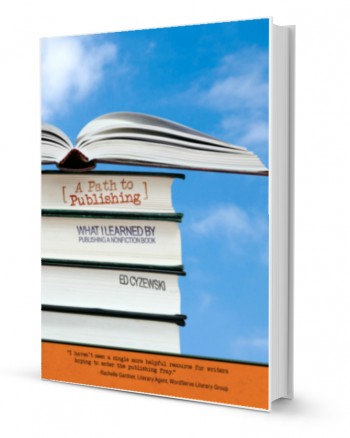
Being a pastoral person without a church and a supporter of authors without a literary agency, I didn’t really know what to do with myself until the fall of 2009 when I got the idea to write a book about everything I learned after publishing my first book. It’s called A Path to Publishing, and it takes on every question that new authors may ask from the perspective of an author who has just completed a first book.

I didn’t have years of publishing experience like the editors and agents who speak at conferences, but that was actually my greatest asset. I could walk newcomers through the basics of book publishing from their perspective. I’d just felt everything they were feeling, and I’d just asked all of the questions they would be asking. It’s a full-length book full of publishing tips.

I received great endorsements, reviews, and feedback, but I’ve always struggled to find a way to make the book widely available while still letting readers pay something for it if they wanted to. The solution has finally come through NoiseTrade.

Today you can download A Path to Publishing completely for free, provided you pass along your email address.

Download your copy of A Path to Publishing now.

This book is like a personal writing conference. In fact, a friend who read it and then attended a writing conference said he learned a lot more from my book.

So the book is completely free, and I plan to leave it that way. It feels incredibly stupid to make that much work a free giveaway, but my priority all along has been helping writers take their next steps. A free eBook strikes me as the easiest way to accomplish that goal.

However, my foolish optimism doesn’t stop with this free eBook.

I’m also launching a small publishing community on August 14th. Here’s why: I’ve met so many people who are frustrated, fearful, confused, and uncertain about what to do next. I’m creating groups of 15 people who will meet for six one-hour online video sessions in the evening to talk about all of that.

I’ll organize each session around a specific publishing topic and will customize our time around answering particular questions. Most importantly, if you need support for the publishing process, this can become a community where you can say what you’re really thinking and ask those questions that have been nagging you.

The group is called Journey into Publishing, and the early bird rate for all six sessions is $60 (plus a small Eventbrite fee). That’s only $10 per session.

The early bird rate ends July 5th, and spots are limited to 15 people. If we have enough interest, we’ll add another group so that we can keep our meetings small and personal. Need to learn more? Visit my information page.

Eventbrite - Journey into Publishing

So there you have it.

I’m giving away my eBook on publishing AND hosting an online book publishing community. Both of these moves strike me as completely sensible and helpful for others, but what do I know? I’m just a writer.

Don’t forget to pick up your free copy of A Path to Publishing today!

Path-to-Publishing-side2

I’m Offering a Big Discount for Book Proposal Evaluations This Winter

book proposal editing penAt the start of 2005 I had just finished seminary and had a long, rambling paper from an independent study that I wanted to publish. I had no idea what I was doing, so I started asking around at my seminary, and my professor put me in touch with an editor. The editor sent me a book proposal template, I filled it out, hit send, and waited.

I waited, and waited, and waited.

Finally, he replied with a firm “No.” His message made two things clear:

This was not a good book idea.

I wasn’t the guy to write it even if it was.

Crestfallen, I tried to redeem myself by contacting two other publishers. I once again filled out my book proposal according to their guidelines, and they also rejected me. I’m sure I still have the emails buried in my GMail account, but I’m afraid to look.

I finally signed on with an agent who overhauled my proposal several times before we pitched the book again.

The idea was still basically the same.

I was still the same guy, albeit with a blog.

As if my agent had accomplished something magical, NavPress signed me to a contract to write what later became Coffeehouse Theology. It’s no mistake that my book was only accepted after I received professional help.

Why Are Book Proposals So Hard to Write?

Nonfiction book proposals require a unique blend of creative writing and marketing know-how. You have to pitch a winning idea, demonstrate that people want to read it, list ways you can reach those people, prove you have the credentials to write it, and convince an editor that they’re the right publisher for this book.

Over the years I’ve pitched a variety of nonfiction book projects to many publishers, and while it hasn’t necessarily become easier, I have a much better idea of what works and what doesn’t work. In 2013 alone I signed three book contracts based on my proposals.

Along the way, I routinely overhauled my proposals and refined the message of each unique section. I’ve also consulted with a number of aspiring authors on their proposals, and many of them have since been published.

A Special Offer for You…

This winter, I’m offering 10 nonfiction book proposal critiques for $200 each, a $100 savings from my regular price of $300 per critique. I’ll also throw in a copy of my book A Path to Publishing: What I Learned by Publishing a Nonfiction Book to help you refine your proposal along the way.

I’ll offer the critiques on a first-come, first-served basis, aiming to work on 2-3 proposals a week, with the last day of March as my end date.

THIS IS FOR NONFICTION BOOKS ONLY.

If you’re interested in signing up or if you have questions, email me at edcyzewski (at) gmail.com.

What I’ll Do for Your Nonfiction Book Proposal

Nonfiction book proposals can be divided into two basic sections: the marketing information (book summary, audience, promise for readers, competing works, publicity, etc.) and the book content (chapter list and 2-3 sample chapters).

I’ll read through your proposal from the perspective of a potential editor. I’ve worked with and spoken to enough editors that I have a clear idea of how most publishers approach book proposals. I’ll suggest revisions, offer ideas, and do everything I can to point you in the right direction for your project.

While I can’t guarantee that an agent will take you on as a client or that an editor will accept it, a professional critique will increase your chances of acceptance exponentially. I can’t think of a single author I know who has sold a book proposal without some kind of professional help.

I’m not saying you can’t write a proposal on your own. There are some great books out there that will walk you through it. However, if it’s your goal to publish a book, a personal evaluation of your project will give you specific, concrete ideas that you can work on today and help you spot problems in your proposal before an editor emails you about them.

Questions? Email me at edcyzewski (at) gmail.com.


Why Now?

I’ve been using book proposal critiques over the years to barter for marketing or design services, as well as to simply help out friends. This winter I have a chance to buy back some study guides for Coffeehouse Theology from my publisher before they go out of print. I put a lot of work into these study guides, and I believe they can still help readers think about what they believe and where their beliefs come from.

This book proposal experiment will help me buy and ship the study guides, saving them from getting pulped. So if you love books, your money is going toward a worthy cause!

Download the Kindle Bestseller-Creating Space

creating-space-angled-250Creating Space: The Case for Everyday Creativity

Download this Kindle Bestseller today for $.99.

“Ed’s writing is clear, engaging, and enjoyable to read. I highly recommend it, especially for people who don’t think they have a lot of creative energy to offer.”
– Matt Appling, Art Teacher and Blogger

Creativity is a gift everyone has been given to share, but doubt, discouragement, and distractions hinder the ability of many to pursue their creative passions. Creating Space advocates for the creative gifts in every person, arguing that…

– Creativity is not a mistake.
– Creativity can be developed.
– Creativity is a vitally important gift for others.

This brief manifesto on creativity is for everyone. Whether you doodle, sing in the shower, knit scarves, or scribble poems, Creating Space will encourage you to make space in your life in order to fulfill your creative calling, using your gifts to their fullest extent.

“This book is a much-needed resource for anyone who has lost the artist within due to the hurriedness of life.”
– Ben Arment, Founder of STORY

Creating Space banner price

A Writer’s Secret Weapon: Honest Feedback

redpen

When I wrote a short story for a contest a few months ago I gave it to my wife and to a friend for feedback. They both love to read, but I hadn’t anticipated the results.

My wife felt comfortable telling me that it was terrible. My friend just said it was alright.

I thought they would both say something similar, but my wife ended up giving me the feedback I needed in order to rework my story. She was right. The original one didn’t work.

Paying $15 to enter a lousy story into a contest is not my goal.

Just about every article that passes the “wife test” is accepted by an editor or at least receives praise. One story, that passed the wife test, even received an honorable mention in a Glimmer Train contest.

I’m lucky to have such a talented reader in my home that I can trust implicitly to provide honest feedback. She is my secret weapon who has saved me a lot of disappointment and frustration in the long run.

I have read similar stories from writers who rely heavily upon one trusted reader who is sometimes a spouse and other times a member of a critique group. Keep in mind that a spouse is not always the best choice for feedback.

What to look for in a reader:

  • Interest in the same subject matter.
  • Attention to the details in your genre (eg. what makes for a good plot in a novel).
  • Trust and comfort to tell you the truth.

No writer can catch all of his/her mistakes. If there’s a hole in an argument, a weak point in the plot, or an explanation that falls flat, oftentimes an attentive and critical reader is one of the safest bets in finding them. If you’re waiting for an editor to catch your mistakes, chances are you’ll just receive a form letter saying, “Your work does not meet our current needs.”

That could be a clue that you really need better feedback before you submit your work.

How to Know if Your Book Idea Works: Is It Unique?

I’m guessing you can count on one hand the books you’re read more than once. We typically read for information or in order to be entertained by a particular story, and then we return the book or stick it on a shelf. If we really enjoy it we’ll recommend it to our friends.

If you read a book explaining the significance of the beaver trade in colonial America or telling the story of a young woman who finds out that she’s really the princess of a small country, I’m guessing you wouldn’t be tempted by another book that explains the animal-centered commerce of colonial America or how a country found it’s unsuspecting princess in a mall department store.

In other words, if you’re just rehashing what’s already out there, chances are you’ll have a hard time finding readers. That isn’t to say you need to have a completely fresh and unique idea that no one has ever done before. There are fresh angles to explore in topics that are already addressed in books and new spins we can add to old stories.

However, you need to watch out for the “been there, read that,” response from readers. It would be terrible to invest a year or two of your life into a book project that fails to sell because it’s been done.

I know that the spirits of aspiring authors are crushed every time a new vampire book is released, but even if there are plenty of repeats out there, publishers and the general public are looking for unique books with something new to say. For every vampire spin-off, there are plenty of innovative and unique books released each year. For example, I encourage you to read something by Susanna Clark, Jasper Fforde, or Neil Gaiman for examples of authors breaking new ground by tinkering with older forms.

Can you add a new angle to a topic that has been covered extensively? Can you draw in your readers without tossing in a character with a gun (such as secret agent Michael Scarn?)?

If someone has already nailed your book topic, I encourage you to buy that book, read it, and consider what else needs to be addressed in your own book. In fact, reading your competition is essential by way of not only selling your book, but making sure you write with an awareness of your genre and field.

If you claim to present a ground-breaking, fresh, new, riveting book that only rehashing what five others have already done, then you’ve just spent a lot of time working on the project that’s going no where fast.

Perhaps you could begin by asking yourself this question: What can I write that no one else can?

How to Know if Your Book Idea Works

I have had publishing hopefuls ask me whether their book ideas were good, and I have to admit it’s a tough question to answer. There are many factors to consider when setting out to publish a book.

It’s most important in my experience to summarize the book succinctly, to have a solid title in mind, and to know exactly what you need to say in order to evaluate its merit. The details of each chapter may be fuzzy, but at least the main idea, controlling metaphors, and outline should be pretty clear before evaluating whether or not a book could work.

Some sample chapters will help you sort through how substantive your ideas are and if you can carry on for an entire book. Many good book ideas work better as magazine articles.

There are several factors you’ll need to consider when evaluating whether your book idea works. I’ll give you a hint right now, it won’t be enough for the idea to be good. I’ve seen my own good ideas and the good ideas of others fail the editor test.

They need to be better than good, and that’s what I’ll discuss in my next post.