
Can Parents Ruthlessly Eliminate Hurry from Their Lives?

clock-1529321-638x478

I read once that in the early days of his ministry at Willow Creek Community Church, pastor John Ortberg contacted a spiritual leader for advice (I think it was Dallas Willard).

“What do I need to do to be spiritually healthy?” Ortberg asked.

Long pause.

“You must ruthlessly eliminate hurry from your life,” he said at last.

That’s it. Willard refused to add anything else to his advice—not even a footnote.

That concept sounded challenging when I only had to manage myself and my anxiety-ridden mind. Now we have kids, and hurry just feels like the baseline for every day.

Before the birth of our first son, I asked a mother of three (now four) about the ways that having a kid changes your day-to-day life.

Her eyes grew big. “The nap,” she said. “Everything revolves around the nap.”

I only have two kids, but her advice has proven true thus far. Most days I can only make the nap happen if I hurry.

If you’ve ever seen a young kid completely losing it in a store, red-faced bawling and throwing everything while shrieking, “NOOOOO!!!!”, you have most likely seen evidence of either a late nap or no nap. Not every time, mind you, but this is a typical outcome for nap-less child.

I consider myself a spiritual or contemplative writer. I also spend about half of each day with our kids. Hurry feels essential to the latter even if it’s toxic for the former.

Most days it’s on me to get the kids home in time for their naps, preparing lunch, finding what they need for nap time, and setting things up for a smooth transition for when my wife comes home to put the oldest down for a nap.

If I’m late, there’s no wiggle room. Lunch is a long, slow, messy disaster where the older child spills milk frequently, food is chewed up and then thrown by the younger child, and both require constant prodding to take the next bite.

You could say that each day is like a stack of dominos where falling off course at an early point in the day makes it that much harder to knock out the next thing.

If the kids are late for lunch, then I can expect that they’re late for their naps, I’m late to my work, the chance of at least one kid having a melt down increases, the chance of short or skipped naps increases, and then an afternoon of over-tired and cranky kids increases.

There’s no single moment that is a make or break scene. A late nap isn’t a guarantee that the wheels will fall off. It’s more like you’ve loosened up the lug nuts on the wheels and taken a high-speed drive on a bumpy road.

In order to make the nap happen I have to manage the prodding of my children throughout the morning. If we’re going to the children’s science museum and still have time for lunch, the ideal is to leave the house by 9:30 am, and the prodding always includes negotiating, cleaning up spills, and multiple threats. The journey from the parking lot to the ticket desk to the play area requires SIGNIFICANT prodding to stay on track. Then the play time is followed by more prodding to get a snack and more prodding to get all the way back to the car and then, hopefully, a little prodding to get into the house.

I know that my tendency is to be a hurried, up-tight, no-nonsense parent. While we can’t stop and look at every single display in the science museum hallway, I began to wonder this fall if I needed to work on cutting back on the hurry in my life. I started to notice that plenty of parents bring their kids 5-10 minutes late for pre-school. Yes, our son prefers to be there early, but that has yet to translate into cooperation when leaving the house without a long list of conditions and needs.

There are times when we genuinely need to move faster in order to get the kids home in time to eat and then sleep. However, hurry has also become a default setting of sorts for myself.

Hurry becomes a lifestyle rather than an occasional tactic for moving kids in the right direction when time is of the essence.

I’m working on my awareness of hurry through my daily Examen practice. I want to know when I’m making too much of a small thing. I also want to extend grace to myself when I’m doing my best to handle a difficult situation.

I can feel the pull of hurry when I’m praying, meditating on scripture, reflecting on my day, or reading at the end of the day. There’s a pull to get this done and move on to the next thing.

With hurry, life becomes a production line where tasks need to be completed efficiently and production capacity is the only goal.

Hurry hates stillness and quiet.

Hurry hates “being” because it’s all about doing. Spirituality needs being in order to translate into doing.

Parents who want to cultivate a healthy spiritual life regularly face this gap between what spiritual leaders tell us we need and the meager scraps left in our days. This spiritual struggle while parenting small children is well documented in Micha Boyett’s book Found.

Must parents watch their spirituality whither away under the burden of hurry?

I’m very much in process here. I don’t have the answers. I do have an observation:

The spirit or mindset of hurry strikes me as a far greater threat rather than beating myself up over each time I have to hurry in order to keep our kids happy and sane.

I don’t want to let hurry become my default. I don’t want hurry to be a part of nearly every interaction with my kids.

And here’s the real kicker and perhaps the greatest trap of all: We can be in a hurry to get rid of… hurry.

I’ve been moving into a season of awareness and discernment about hurry. I don’t want to rush this. After all, I most likely became a hurried, worried parent gradually. What makes me think the solution will happen overnight?

I’m not in a hurry to address my struggles with hurry, and that feels like enough for today.
 

An Interview with Tara Owens on How Writers Care for Their Souls

What does soul care look like for writers?

What is the most important aspect of a writer’s career?

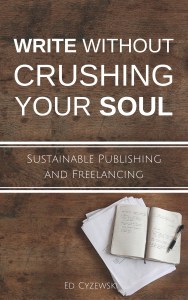
These are just a few of the questions I was fortunate enough to ask author and spiritual director Tara Owens when our paths crossed. We sat down for a 40-minute chat in a Barnes and Noble  (Note: the background music is loud but not overpowering, and I’ll happily send the file to anyone who can help remove it!). We also spent a little time discussing my new book, Write, Without Crushing Your Soul: Sustainable Publishing and Freelancing, which releases November 10th and is available for a $1.99 pre-order until then.

Enjoy the interview!

Listen on SoundCloud or the direct file

Order the eBook version of
Write without Crushing Your Soul for just $3.99 today.

Copy of Write without Crushing Your Soul LARGER

 Kindle | iBooks | Nook | Kobo

About Tara Owens
Tara is a spiritual director and founder of Anam Cara Ministries, which is dedicated to the practice of soul friendship, of coming alongside in order to facilitate healing, wholeness, holiness and spiritual formation.  Check out her highly acclaimed book Embracing the Body. Reviewer Kristine Morris writes, “Through a gentle, compassionate exploration of our thoughts and feelings about our bodies, enhanced with exercises for reflection, Owens helps us to learn what it means to be at home in our own skin and sensitive to the body’s innate wisdom.”

I Tried Quiet Prayer Once and It Didn’t Work

waiting-for-my-plane-1480605-640x480

How many things in life work great the first time around?

Is there anyone who can just pick up a worthwhile discipline or skill after reading a book and trying it once?

Can you learn to paint, knit, sew, or cook with one shot?

Can you remember the first time you tried to ride a bike? I was taking spills all over the school yard for weeks until I caught on and learned how to balance myself. I eventually spent hours riding down a small hill that would have been terrifying at first.

This past summer I started running regularly. I had been somewhat active in the winter by taking the occasional long walk, but running was a different animal altogether.

I huffed and puffed, forcing my aching legs to keep going a little further before taking a walking break. My runs were something like 60% slogging along and 40% walking at first. I eventually started to run a little bit more evenly and started eliminating the walking breaks.

At a certain point around the middle of the summer, I realized that the first 25% of the run will just be miserable. I’ll start to find my stride about the mid-way point, and then the last 25% will require a bit of intention to keep my pace.

Finally, this September, I started to feel strong and confident during my runs. I didn’t even need headphones in order to play distracting music. Sure, the first bit of the run was still hard, and I had to be intentional about pushing myself to finish strong, but I finally reached a point where I felt strong and confident enough to run at a steady pace without slowing for a break.

If I had stopped running after the first day or even the first month, I would have told you that running is difficult and miserable and no one should ever try it.

If I stopped running today, I would genuinely miss it. It has proven an important way to start my day, and I have seen the benefits in my mental and physical health.

Over the past year, I’ve also taken my exploration of Christian prayer into a deeper pursuit of silence, waiting on God and letting God show up in whatever way God wants. There have been times when I’ve just watched my mind unwind with worry and rambling ideas. Other times I have experienced genuine peace and awareness of God’s love.

Then again, there are plenty of times when it has just felt like I sat by myself for 20 minutes repeating a word to myself like “beloved” or “peace.”

I have long practiced short stretches of silent prayer, say for about five minutes, at the end of my daily Examen. I’ve also meditated on scripture. This pursuit of God through silence and waiting is really, really biblical since the Psalms constantly tell us to wait on the Lord. However, I feel like I’ve been trained to demand.

I’m a recovering anxious American evangelical who loves quick fixes and spiritual growth charts.

Silent prayer feels like: I want my gold star for praying, Jesus. You’ve got 20 minutes to pay up…

This journey into silence is not easy for me. My mind is rowdy and difficult to tame.

I find myself slipping back into bad habits, comparing myself to others and wanting what God hasn’t given to me. Contentment and faith gives way to envy, greed, and discouragement as I look at all of the other people who appear to have it together.

I keep reminding myself of that runner who huffed and puffed along the bike path a few months ago who could barely string together 20 minutes of sustained running. That guy felt so weak and pathetic. He didn’t see how things could get better.

Honestly? I never saw things get better. The improvement in my running was so gradual that I couldn’t see it happen. I couldn’t control it.

My growth as a writer was like that too. Suddenly, one day I started writing markedly better manuscripts compared to the drivel I used to submit to my editor. Yes, there are always revisions, but the process is less painful.

I’ll be the first to tell you that prayer isn’t quite as difficult as it used to be. I can now sit for twenty minutes in a row with a relatively focused mind. Sometimes I sense God moving, and sometimes my mind does all of the heavy lifting.

It’s a long-term process that you can’t plug into to your life for predictable results every time. Prayer isn’t a life hack or commodity that you can install in your smart phone for an instant solution to a problem.

There’s a whole industry that promises quick, cheap, simple serenity or spiritual enlightenment. Just read the book, try something for five minutes a day for a week, or install an app in your phone, and you’ll make amazing strides in your spiritual life!!!

God’s love is a free gift that we can never earn, but each day feels like a knock down, drag out struggle to find it and experience it. My life is so full, my mind moving so fast that it’s hard to slow things down for God to settle in.

I can’t track my progress. I don’t get stickers every time something good happens while I pray.

But it sure seems like any kind of meaningful development in a lasting practice calls for this kind of dogged, determined pursuit for what matters the most.

It’s galling for the American in me to come to terms with a lifelong approach to discipleship, what Eugene Peterson called a long obedience in the same direction. Each day I’m training myself to believe that I am loved by God and that this love can gradually change me into the kind of person who is also able to extend a kind, gracious, patient love to people who would rather just grab the quick fix.

This is the first time I’ve ever practiced such intense, expectant waiting. It’s no wonder that I feel like I’m not very good at it yet.


Read More about Contemplative Prayer…

After years of anxious, hard-working spirituality, I found peace with God by practicing contemplative prayer. I’ve written an introduction to this historic Christian practice titled:

Flee, Be Silent, Pray:
Ancient Prayers for Anxious Christians

On sale for $9.99 (Kindle)

Amazon | Herald Press | CBD

FBSP blog footer

I Was Saved But I Lost My Soul

life-preserver-1187636-639x426

Jesus said, “What good is it for someone to gain the whole world, yet forfeit their soul?” Mark 8:36 (NIV)

I’ve always thought of this passage as Jesus speaking of what saves our souls in the next world. In other words, become my disciple by converting, and you will save your soul with eternal life.

Having taken a trip down “Romans Road” and praying the Sinner’s Prayer, I thought I had my soul covered. Perhaps not.

I’m not going to say that “eternal security” is the wrong way to read this passage, but I think I’ve been missing the fuller meaning of Jesus’ teaching. There are depths here that I have yet to explore.

The contrast in this conversation is between a disciple and someone who gains the whole world instead. One has chosen to follow Jesus with the promise of a cross to bear and the safety of his/her soul, while the other gains notoriety, respect, and comfort while losing his/her soul.

My soul isn’t just the part of me that goes to heaven when I die. It’s also a place where I commune with God today. Those who follow Jesus keep in touch, so to speak, with their souls, while those who gain the whole world will lose touch with their souls.

Think of John Wesley’s question: “How is it with your soul?”

Those who have learned to abide in Jesus can answer that question.

Those who do not may well respond with a list of their accomplishments.

Although I have very much considered myself a follow of Jesus for most of my life, I have lost touch with my soul over the years. I’ve pursued financial stability, a career that makes sense based on my talents, and some measure of popularity and acclaim as a writer. Each time I’ve let go of a particular desire or goal, I’ve found that a barrier has been removed between myself and God.

I’ve freed myself to find God a little bit more each time as I’ve let go of my false self and my misplaced priorities.

Jesus is speaking in extremes when he mentions gaining the whole world vs. saving your soul. This isn’t an all or nothing proposition.

I have given up my soul in pursuit of a tiny little piece of the world, nothing close to “gaining the whole world.”

It doesn’t matter if I can point to someone who has sacrificed more of herself or gained more of the world. We can lose ourselves and our connections with God over the smallest distractions and shifts in direction.

I have no interest in saying who is in and who is out when it comes to saving souls for the next life. Jesus warned us specifically against playing the role of judge in such matters. I do know, however, that I have considered my soul safe and sound when, in actuality, I had no clue where it was or how to find it.

My soul had no anchor in the presence of God. I was blown about by my anxieties, the wisdom of others, and my shifting, endless, fruitless goals.

My primary job is to seek the presence of God, making my soul a place for the Spirit of God to rest. Anything else that follows isn’t for me to determine.

In the Gospels, Jesus speaks of the spiritual life as a matter of abiding, becoming like a vine that connects to a branch. When I lost my soul to the pursuit of my own desires, I had cut myself off from the branch, hoping to be spiritually fruitful without the “work” of simply abiding.

It’s so hard to fathom how abiding is both work and not work. The work of abiding is the stillness, the surrender, and the desperation that comes from opening ourselves up to God and trusting God to provide everything that follows.

The work of abiding opens our lives up to God so that God can point at our souls and say, “There you are. See how you are loved and how my peace rests on you? Here is who you really have been all of this time and how I will always see you.”


Read more about the basics of contemplative prayer
and Christian spirituality in my latest book:

Flee, Be Silent, Pray:
Ancient Prayers for Anxious Christians

On sale for $8.49 (Kindle)

Amazon | Herald Press | CBD

Artboard 1FBP Blog Footer post release

Rohr for Writers: Your Downfall Can Lead to Resurrection


Rohr forWriters

“If there is such a thing as human perfection, it seems to emerge precisely from how we handle the imperfection that is everywhere, especially our own. What a clever place for God to hide holiness, so that only the humble and earnest will find it! A ‘perfect’ person ends up being one who can consciously forgive and include imperfection rather than one who thinks he or she is totally above and beyond imperfection.”

Falling Upward


There’s a rule that many writers and artists follow: some of your best work will come out of your deepest pain. If I quoted every time I’ve heard that at a writing conference or read books about this, I would just have a blog post full of quotes from other people.

So much of what we crave in our lives comes by first confronting our pain, failures, and struggles.

If you want intimacy with someone else, it will be forged by facing both relational and external struggles together.

If you want to excel at writing, you need to at least face your lowest points in life, your failures, your fears, and your anxieties. This is where some of your most authentic experiences can be found.

By the same token, if you want to grow in prayer, you also need to bring your sins, shame, and deficiencies to God. These are the raw materials of spirituality because they reveal all of the false commitments, false gods, and false identities that keep us from God and each other.

Our pain and failures aren’t just enshrined as a monument to our misery. They are transformed in the act of confrontation. Most importantly, we are transformed as well. In fact, if you want to reach any kind of lasting change that could make a difference in your own life or in the life of anyone else, you need to start here.

No matter what else you stick in front of failure, pain, or fear, these things will keep eating away at that false veneer.

No matter how much we force ourselves to get over it and to move on, we’ll continue limping until the source of the injury is healed.

We won’t experience relief and wholeness until our pain and struggles are transformed. You can’t find a way to go around this, you can’t make up enough rules to keep you safe, and you can’t teach yourself into becoming better or healed.

We’ll have the most to offer others, either through our prayers or our writing if we prioritize the fearless uncovering of our pain before God and on the page as we write. We don’t have to shout our imperfections in the street for all to hear or post them on our blogs for all to read—in fact, please don’t do either of those things!

This is the deeper soul work that takes place in quiet, secret places.

This is the foundation for our lives that determines the power of our art, the potency of our prayers, and sturdiness of our relationships.

Our pain and our struggles are most certainly an affliction in many ways, but that doesn’t mean we should run from them. Our greatest healing, creative work, and ministry to others will come through these very things that we had once seen as our downfall. If we bring the causes of our downfalls to God, we’ll find that they’re the very things that lead us to resurrection.


For a bit more about this topic, check out my book:

Pray, Write, Grow: Cultivating Prayer and Writing Together

Rohr for Writers: How to Find the Enlightenment We Cannot See

Rohr forWriters

“Any attempt to plan or engineer your own enlightenment is doomed to failure because it will be ego driven. You will see only what you have already decided to look for, and you cannot see what you are not ready or told to look for.”

-Richard Rohr, Falling Upward, 66


The most important turning points of my life and my faith have come when I have felt least prepared for them.

Rohr says it well here: we cannot see what we are not ready or told to look for.

Ironically, when God breaks into our world and pushes us beyond what we know and have experienced, that is the moment when we are “ready” to see it, even if the moment of realization is overwhelming and disruptive.

If I could hold onto an explanation of what prayer is capable of doing, it’s this sort of enlightenment where God takes us beyond ourselves. It’s the transforming power of the Spirit in our lives that makes the life of God apparent in us.

This is why prayer and writing can be particularly powerful when they work together: writers are seeking clarity and enlightenment through our creative work. We’re trying to get a slight edge, and it’s often very slight, on how everyone sees the world. We’re pulling back the fabric just a bit to say, “Hey, have you ever looked at things from this angle?”

If we’re just repeating what everyone already knows, why would they bother reading our work? That’s why the commonplace tropes such as, “Everyone knows…” or “It’s a time-honored adage…” are such terrible ways to begin any piece of writing. Every college composition teacher surely has hands raised, shouting “Amen!” at that point.

Prayer is a leap into the void of the unexpected. We don’t know where God will take us. If we have a clear map in mind of what’s supposed to happen when we pray, then we’re not actually praying. We’re just paying God lip service rather than entrusting ourselves to God’s loving presence. It’s not up to us to set the agenda when we’re in God’s presence.

Writing is a similar leap. We begin the creative process and submit ourselves to it. We go where it leads. Yes, we outline and take notes and write drafts, but we can only go where the process takes us. At a certain point we either ditch the project or polish it for wider distribution.

Whether writing or praying, the most important part of either process is the part you can’t plan out or see coming. They’re both leaps of faith, acts that put us in positions where could end up in a place that is beyond ourselves and leaves us forever changed.

Rohr for Writers: Writers Are Driven from Within

Rohr forWriters

“The good news of incarnational religion, a Spirit-based mortality, is that you are not motivated by outside reward or punishment but actually by looking out from inside the Mystery yourself. So carrots are neither needed nor helpful. ‘It is God, who for his own loving purpose, puts both the will and the action into you’ (Philippians 2:13). It is not our rule-following behavior but our actual identity that needs to be radically changed… You do things because they are true, not because you have to or you are afraid of punishment.”
– Richard Rohr, Immortal Diamond pp. 85-86

It’s common for writers to talk about “finding” something to write about or “looking” for writing topics. We get the sense at times that we are chasing ideas that are hiding somewhere, and at times we can begin to despair that we’ll ever track them down.

Just as Richard Rohr suggests that our spirituality should originate within ourselves as we rest in God’s indwelling Spirit, I believe that writing can spring up in a similar way. As we ground ourselves in the present love of Christ and tune into what he’s saying to us, we’ll find wisdom and direction for our lives and even for our writing.

This changes us from religious people who strive and think our way to God and turns us into spiritual people who rest in God and allow God to guide us. You could say we’re cutting to the chase here, and that really is the beauty of the Gospel message after all. What we strive to accomplish on our own has already been done in us. We just need to receive it and live in it.

However, if anything takes work in the spiritual life, it’s clearing out space in our schedules and in our minds for this spiritual reality to take hold. The indwelling Spirit is all over the New Testament scriptures, and yet, how often have I tried to move forward with God’s work in my own strength and wisdom?

Perhaps you’re weary, uninspired, or just plain fearful about the direction of your life or your writing work in particular.

The Good News for you is that God is already in this with you. The Spirit is present. Your work is to rest in the Spirit of God, to trust that the words of Christ are true for YOU. There aren’t any footnotes in the words of Jesus with special clauses that rule you out.

If you can find peace in the presence of the Spirit here and now, you’ll be able to write from a healthier place of security and direction. You’ll know that first and foremost, God is in and with you, and you’ll find greater creative freedom to explore the directions that God places on your heart.

Criticism won’t sting in the same way if you’re writing out of God’s leading. Approval won’t carry the same weight. Anxiety and fear will gradually lose their power.

You’ll have freedom to seek the truth, and when you find it, you’ll have the freedom and peace you need to write about it. And when you are finished writing, you will have the comfort of knowing that writing is only a small part of the awesome mystery of God dwelling among us.

Read more about prayer and writing in my book:

Pray, Write, Grow: Cultivating Prayer and Writing Together

Guest Post for Micha Boyett: How The Examen Empowers Us to Pray and Write

15_02_13_PrayWriteGrow copy

I’m guest posting at Micha Boyett’s blog this week to talk about prayer and writing, which is pretty much right in her wheelhouse. I met Micha back in 2012, and was totally blown away by the pitch for her (then) upcoming book Found (as of this moment, it’s $3 on Kindle!). If you haven’t read it yet, I think quite a few of us will really relate this book’s stories about her struggles to pray while parenting little ones.  I’m honored to write at her blog about the Examen and how it has transformed both my prayer and writing: 


When I try to pray, I often find that my anxious thoughts get in the way.

When I try to write, I often find that I can’t form a single thought.

It feels like feast or famine most days.

How can I face my thoughts for prayerful contemplation without getting swept up in anxiety and worst-case scenarios?

How can I hang on to a few thoughts that are worth exploring through writing before the blank page wins?

Thankfully I’ve found that one practice can help with both problems. The Examen, developed by St. Ignatius of Loyola, offers a lifeline to stressed out, over-thinkers like me, while coincidentally prompting writers to address what matters most.


Praying with the Examen

Ignatius believed the Examen was a gift given directly from God. After spending a significant time in prayer, he found that prayer could move forward best with this time of reflection and meditation.

The Examen is set apart from run of the mill self-reflection right from the start by its first step: Awareness of God’s Presence. We don’t face the most challenging parts of our lives alone. God is with us as we begin the Examen, and as we move forward into it, that awareness will only grow. In fact, the Examen encourages us to invite God into our days and our times of reflection.

The genius of the Examen is the way it stops the roller coaster of worry and distraction when I begin praying, while still offering a path forward. It provides an orderly, prayerful direction to my thoughts so that I can honestly face what I’m truly thinking without feeling restrained.

Read the Rest at Micha Boyett’s Blog.

Guest Post for Michelle DeRusha: Where Do We Start with Prayer?

15_02_13_PrayWriteGrow copy

I’m guest posting this week for my friend Michelle DeRusha, the author of the fantastic books Spiritual Misfit and 50 Women Every Christian Should Know. I’m sharing a guest post based on my new book Pray, Write, Grow: Cultivating Prayer and Writing Together. While I suggest in my book that prayer practices can help us write, we first need to sort out where we’ll begin with prayer:


One of my most intense moments in prayer started on a whim.

I sat down to pray in our living room one morning, and for some reason my mind kept venturing back to the moments of my deepest shame.

The relationships I’d messed up in college.

The many stupid things I said during our first year of marriage.

The time (times?) I placed unreasonable expectations on a good friend.

As I squirmed and fretted over my shame, I had a “revolutionary” thought: “What if I just prayed as if God knew all about this stuff already?”


We Bring Our Vulnerabilities to Prayer

I’m not breaking new ground when I say that we can’t hide anything from God or that we don’t have to be perfect in order to approach God. That’s pretty much covered from most pulpits on Sunday morning.

Actually living as if we have nothing to hide and God still loves us is quite another matter.


Read the Rest at Michelle DeRusha’s Blog.

Releasing My New Book: Growth in Prayer and Writing Starts in the Same Place

15_02_13_PrayWriteGrow copy

Today I’m releasing my latest book, Pray, Write, Grow: Cultivating Prayer and Writing Together. This book combines the questions: “How do I find more time to pray?” and “How can I improve as a writer?” What if you could grow in both prayer and writing at the same time? What if the time you invested in writing could help you pray, and the time you invested in prayer could help you write? Here is part of the opening chapter that begins to answer those questions:


Every time you bow your head in prayer, open up a blank document on your computer, or flip open a journal page to write, you’re taking a leap of faith. Writers choose to believe they can string together another series of sentences that will speak to the needs of readers somewhere. When people pray, they’re choosing to believe there’s a good, loving God reaching out to us, listening to our prayers, and meeting with us.

We have faith that the discipline of writing will pay off. If we keep working at it, keep practicing, keep asking for feedback, keep revising, and keep publishing our work wherever possible, we’ll get better, reach more readers, and take meaningful steps forward. If we face the most challenging and vulnerable parts of our lives, we have faith that we’ll find words that offer clarity and perspective. If we put our words in front of readers, we have faith that some will reply, “Yes! Me too!” If we take the time to continually examine ourselves and care for ourselves, we have faith that the words will continue to come together year in, year out, whatever life throws at us.

We have faith that the practices of silence, praying with scripture, or reciting the prayers passed on to us will bear fruit over time. If we continue to fight through our fears and anxieties in order to sit in silence, we trust that God can meet us, even if it leads to results we aren’t expecting or doesn’t even result in quantifiable progress.

If we continue to cultivate habits of stillness and quiet throughout the day, we have faith that God can meet us and will speak even at moments when we aren’t expecting to hear anything. If we continue to wait on God, we have faith that periods of silence don’t indicate God has abandoned us.

We can even have faith that growing in one practice could lead to growth in the other.

Every time I grow as a writer, my prayer time receives direction.

Every time I grow in my prayer time, my writing has increased clarity.

Writing and prayer stand well enough on their own, but many of the disciplines that help you write better will also help you pray better and vise versa. This wasn’t something I planned out. I never set out to find connections between the two. Rather, I spend significant parts of each day writing and praying, and at a certain point I started to notice how the two converged.

As I prayed, my writing started to shift and grow. Both the disciplines of prayer and the lessons I learned transferred over to my writing, and my writing furthered my personal reflection and helped foster the habits and disciplines I’d been cultivating while praying. When prayer and writing finally started working together in my life, I began to take significant steps forward in both simultaneously.

I suspect that both prayer and writing can offer a lot of benefits by themselves. I certainly don’t think you have to do them together. However, if you’re already inclined to both write and pray, you may as well figure out how they can help each other. And if you’re experienced in one, you may find opportunities for personal or spiritual growth by trying out the other. I would even go so far as saying it like this:

If you want to improve your prayer life, try writing.

If you want to improve your writing life, try praying.

The two require many of the same practices, disciplines, and virtues. Of course you should certainly only pray out of an interest to meet with God on a deeper level, just as you should only write if you have something to say or process. I’m not trying to tap into the commercial writing potential for prayer or to guilt the reluctant into writing. Rather, I want to drive home the point that prayer and writing not only happily co-exist, but also feed off of each other and can benefit each other.


Order your copy on Amazon for $1.99 until March 16.
(regular price $3.99)

Nook | Kobo | iBooks | Print

Download a Sample PDF.

Read the reviews at Goodreads.