How Conservative Christians Snap and Turn to Atheism

I was far from the most conservative student at my nondenominational evangelical seminary.

Yet, I hit a point where I realized that my faith would crumble if I remained rooted in a conservative theological system that emphasized the boundary markers of knowledge, rigid morality, and a sense of duty or obligation over the life-changing power of Jesus through the Holy Spirit at the center of our faith.

Perhaps the more easy-going and fluid faith traditions on the Christian left could result in a bunch of lukewarm people who reduced their faith to punch card Christianity, but I could see the dangers on the conservative side that had a form of godliness while denying its power. It would have been all too easy to focus on theological concepts and controlling aspects of the faith that would have let me down in spectacular fashion.

I once had a pastor who often quipped about conservative Christians, “You either become a mystic or an atheist.”

It’s a hyperbole that would make plenty of conservative Christians break out in hives. They certainly don’t want to become atheists, but being mystics isn’t any great shakes for them either.

It’s easy to equate conservative Christianity with a drab Bible church presided over by an angry, sweating preacher in a cheap suit screaming about God’s judgment. We can also make the mistake of thinking Christian mystics are miserable religious fanatics sitting in a stone cell in a burlap sack as they lament their guilt and ponder the crucifixion in gory detail.

Neither of those options sounds appealing!

As quick as we are to dispel such stereotypes of conservative Christians and mystics, I have seen enough conservative Christians leave the faith because their theology and practices couldn’t sustain them. A bit of mysticism wouldn’t have hurt.

I’m in a season of life where I’m helping my kids become more aware of God so they can develop their own relationship with God. I am very much aware that I want their faith to be rooted in the mystery and presence of God in their lives that is based on God’s love and grace.

You could say it’s mysticism lite.

Although I am concerned about my kids turning their religious practice into a Sunday morning punch card system, I am perhaps more concerned about them being sucked into the rules and certainty of conservative Christianity that promises a lot of things it can’t deliver if they submit to its controlling systems that generate fear and anxiety.

This anxiety and disappointment hit me hard in my 20’s, and it hit quite a few others hard as well. In the early 2000’s, we were deconstructing, emerging, and endlessly critiquing the religious systems that promised neat and tidy religion in the face of life’s chaos and uncertainty.

I’ll be the first to admit that I wasn’t always deconstructing or critiquing in healthy ways, but they were honest and real based on what I was presented vs. what I experienced.

It’s the temptation of formulaic religion that turns our practices into an equation where doing certain things or believing certain things will lead to specific promised outcomes of peace, hope, joy, security, etc. This overlooks the unpredictable realities of life that defy simple explanations of God ordering everything in our lives to one specific purpose that ultimately brings us prosperity and peace.

Overly simple beliefs cause far more problems than they solve. At first, a seemingly airtight belief system may be extremely appealing, but over time, it can’t hold up in the daily grind of life and the highs and lows that can shake one’s faith loose.

Anyone can practice the simple spirituality of the Christian faith, but it’s not possible to easily explain the complexities of life or the mysteries of God. When we run into mystery, we can’t fill in the gaping voids of life with platitudes we could carve into a hunk of wood or paint onto a coaster.

I am sure there are many paths to atheism, but the one I am most familiar with is from the fragile certainty of airtight Christian conservatism to the seeming exhale of becoming an atheist. Curiously, some are able to become atheists with a sigh of relief that they are free from a life-sucking religious system. Others adopt a kind of fundamentalist/evangelical style atheism that is sure of itself and eager to convert others.

Whatever shape one’s atheism takes, I’ve seen enough of people getting crushed by rules, judgment, fear, and power struggles in the conservative end of American Christianity (most likely white American Christianity), to know we have a problem on our hands.

Our seeming strength of conviction and doctrinal rigidity often attempts to overcompensate for our barren branches that could be nourished by the vine and carry the fruits of the Spirit. Christians have Jesus at the center as our vine that sustains us, but we lose sight of our source of life when we turn our primary attention to maintaining boundaries like doctrinal particulars.

If Jesus is the center and we focus on him, then we will find new life and renewal that we can share with others. If our time is consumed by maintaining the rigid particulars that make up the boundaries of conservative Christianity, we’ll soon become exhausted by its combative, defensive siege mentality where a fragile faith cannot stand without our vigilance.

The vine and the branches is reduced to a theological concept, rather than a life-giving lesson from Jesus.

There are many other paths toward losing one’s faith, but I worry the most about this one because it is not understood by those most likely to go down it.

I imagine someone tuning a guitar by tightening the strings over and over again. No matter high the notes go, the solution is to turn the knobs tighter. It’s true that strings may need to be tightened sometimes, but there are moments when tension must be loosened as well.

At a certain point, people who are turned tighter and tighter with rigid doctrines are going to snap. When they do, the conservatives around them will often say, “They only snapped because they weren’t rigid enough!”

And so, they become more rigid once again, until another person snaps.


It’s Always Jesus Plus Something

Jesus plus nothing image

“Jesus plus nothing” is a mathematical impossibility for our beliefs. 

I’ve started watching The Family on Netflix, a dramatized documentary of the Jeff Sharlet book by the same name. I always thought that I wouldn’t need to read Sharlet’s book because I knew enough about the dark underside of American evangelical Christians and politics.

I was extremely wrong.

Sharlet describes something larger than a secretive group seeking to influence politicians on specific policies through their offers of spiritual counsel and support. There is a kind of fraternity of young men who are trained on the surface to be simple devotees of Jesus alone while absorbing an extremely toxic authoritarian theology that believes these men are set apart by God to do great things, placing them on a level above the common person.

I have long wondered why so many evangelicals in politics don’t believe the rules apply to leaders exercising great power. This is because their status as leaders proves their blessing from God and thus overrides the other moral teachings of the Bible in service of the “higher” call to lead.

There is more than enough judgment for a woman who is labeled as a Jezebel or a “loser“ “brother” who leaves the group. Yet, a powerful Christian leader affiliated with the Family who lies, cheats, rapes, swindles, and commits any other sin to satisfy an insatiable pit of greed or envy is above all judgment and rebuke by virtue of his power and position.

This is an extreme form of Calvinistic fatalism that places virtually unlimited power in the hands of those presumed to receive it via divine decree.

The young men described in The Family have a well-meaning but malicious naivety and simplicity about the Bible made all the more menacing because of the rigid authoritarian structure imposed under the guise of brotherhood and fellowship. They claim to have a simple faith that is Jesus plus nothing, but in applying this formula to real life, there is a millstone’s worth of additions to this formula.

No matter how hard we try, something else will always spoil our illusion of clear vision.

If we dare to believe our faith is Jesus plus nothing, there most assuredly will be Jesus plus something.

Since it’s bound to be Jesus plus something, then we need to interrogate what that “something” is that we attach to Jesus. We have roots to our faith. Some roots are deeper than others, but each person who claims to only follow Jesus is living in an illusion of purity and clarity while carrying the obscurity of what has been passed from others.

When I read the story of the Prodigal Son, I don’t read it as a story of immigration and migrant labor. That’s because I read the Bible as a Christian with Jesus plus something, namely American prosperity.

When I read the story of Elisha and his care for widows and mothers in their times of need, I didn’t notice the ways that God was countering the unjust patriarchal systems of the time. That’s because I read the Bible as a Christian with Jesus plus something, namely white male assumptions of power.

When I read the story of the Good Samaritan, I tend to focus on the ways I can be a good neighbor rather than recognizing the ways prejudice and racism in my life prevent me to see how God is working among other races and nationalities. That’s because I read the Bible as a Christian with Jesus plus something, namely the assumptions of white privilege in a culture still influenced by white supremacy.

That isn’t to say that our goal to remove the things that obscure our vision of Jesus is hopeless. And there is still a space for simple practices of spirituality. In fact, I would argue that theology will be more complex than we would hope or believe, while our practice will most likely benefit us most if it’s simpler than we expect.

The people involved in the Family and other conservative branches of the faith tend to insist on keeping the beliefs simple, while imposing complex hierarchies and practices that seem to have a vague biblical grounding. Yet, these leaders insist that they are above scrutiny since there isn’t much to scrutinize. They just believe in Jesus plus nothing–and a long list of practices and rules and hierarchies that allegedly stem from Jesus and dare not be questioned by the rank and file lest they undermine their God-appointed leaders.

Jesus plus nothing gets complicated immediately.

In my book Coffeehouse Theology, I argue that we can have a simple faith and trust in Jesus, but it is necessary to also analyze, if not interrogate all of the other things we add to our faith on our own.

We each add something to our approach to Jesus based on our faith background, experiences, and awareness of other members of the faith. That doesn’t have to be a bad thing.

If anything, that should leave us humble and aware of our deep need for God’s mercy and the guidance of the Holy Spirit.

We should ask more questions, not less, about our beliefs, but in the day to day grind of life, we can practice a simple faith and trust in our Lord who is present and with those who call out for guidance and help.

If we have any hope in holiness and conversion, then we will surely need to rely on Jesus alone–although even our practices require discipline to set aside time and attention for God. If we hope to be present for Jesus without our assumptions and cultural baggage clouding our view so drastically, then we need to figure out what those somethings are and address them with clarity.

It’s never Jesus plus nothing when it comes to theology. It’s always Jesus plus something, and that something will change how we see Jesus until we figure out what it is.


Photo by StellrWeb on Unsplash

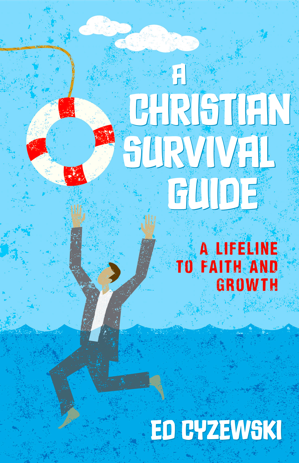
Buy A Christian Survival Guide and 3 Other Books for the Price of One

1404162367_thumb.png

Starting Monday, August 18th and ending Friday, August 22nd, three of my most recent books will be $2.99, and one will be $4.99. Best yet, my latest book A Christian Survival Guide is available as a free eBook on Monday the 18th only. Here are all of the details:


A Christian Survival Guide is also being offered at a steep discount this week.

On Monday, August 18th, it will be offered as a free eBook at select sites:

Amazon and B&N

Tuesday-Friday, August 19-22, it will be offered for $2.99. (See also the Publisher)

Print Copies: Get $3 off on Amazon this week.

Survival Guide Order Button


DISCOUNTED EBOOKS: The Good News of Revelation and Hazardous (a book about making the risky decisions that result from following Jesus), are both $2.99 at Amazon. Unfollowers is $4.99 at my publisher’s website. Scroll down for the links. All offers end August 22nd!


Publisher’s Weekly shared about A Christian Survival Guide:

“Cyzewski approaches each topic with candor, sharing stories that make it easy to relate to the topic at hand. While many of the topics are complex, he provides a point of entry into each and raises thoughtful questions about how much importance Christians can assign to aspects of the discussion.”

After you’re done reading A Christian Survival Guide, I’d love for you to share what you think in a brief review.

Thanks so much for reading!

CASCADE_Template
The Good News of Revelation
$2.99 on Amazon

Purchase from the publisher.

HazardousAngled-160_thumb
Hazardous: Committing to the Cost of Following Jesus
$2.99 on Amazon

Purchase from the publisher.

Unfollowers1-page-0
Unfollowers: Unlikely Lessons on Faith from the Doubters of Jesus

Purchase from the publisher for $4.99.


A Christian Survival Guide
FREE (Monday) or $2.99 (T-F)
Learn More Here…

Purchase from the publisher.

Note: All Amazon links are affiliate links. 

Thanks so much for reading my books. If you have a moment today to share this post using the social media links below, I’d be grateful.

Happy reading!

She Had Every Reason to Stop Believing: On Faith That Survives

1404162367_thumb.png

That night I met a young woman at an inner city church dramatically changed the way I think about faith and doubt. She had huge misgivings and questions about God and the Bible. She felt like the church hadn’t been a friendly place to deal with them. She’d even been spiritually abused by leaders who used the Bible as a weapon.

She had every reason in the world to walk away from her faith. Yet, she held on, served among the poor, and kept showing up each Sunday. The more we talked, the more I wanted to tell her that there are some reasonable explanations for her doubts. She didn’t have to continue on with her faith hanging on by a thread.

Couldn’t there be a place to honestly think through the tough questions we face? Can’t we do better?

I started thinking through the topics that she found troubling and then moved on to the topics that have been threats to my own faith over the years. It’s been a good five years of thinking, questioning, and even doubting. The product of that season of inquiry is my new book, A Christian Survival Guide: A Lifeline to Faith and Growth.

A Christian Survival Guide is on sale today wherever books are sold, and as part of the book release festivities this week, the publishers of my other books are also offering some steep eBook discounts, including two full length books for $2.99 each. Scroll down for the full list of discounted eBooks…

Survival Guide Order Button


DISCOUNTED EBOOK DETAILS: A Christian Survival Guide is available in print or as an eBook, with the eBook priced at $9.99. The Good News of Revelation and Hazardous (a book about making the risky decisions that result from following Jesus), are both $2.99 at Amazon. Unfollowers is $4.99 at my publisher’s website. Scroll down for the links. Offer ends August 1st!


Publisher’s Weekly shared about A Christian Survival Guide:

“Cyzewski approaches each topic with candor, sharing stories that make it easy to relate to the topic at hand. While many of the topics are complex, he provides a point of entry into each and raises thoughtful questions about how much importance Christians can assign to aspects of the discussion.”

After you’re done reading A Christian Survival Guide, I’d love for you to share what you think in a brief review.

Thanks so much for reading!


CASCADE_Template
The Good News of Revelation
$2.99 on Amazon

Purchase from the publisher.

HazardousAngled-160_thumb
Hazardous: Committing to the Cost of Following Jesus
$2.99 on Amazon

Purchase from the publisher.

Unfollowers1-page-0
Unfollowers: Unlikely Lessons on Faith from the Doubters of Jesus

Purchase from the publisher for $4.99.


A Christian Survival Guide
$9.99 on Amazon
Learn More Here…

Purchase from the publisher.

Note: All Amazon links are affiliate links.