To even write about the current crisis in America seems to require saying something that proves or identifies the crisis for those not yet convinced we are in a crisis.
That simple act of proving reality to skeptics is when the wheels start falling off for me.
We are so saturated in propaganda, infotainment, and reactionary rage bait on social media that we seemingly have to begin any discussion about our current crisis with proof of the crisis. That is maddening, and I presume that at least some people desperately want things to be this way to keep us divided, distracted, disdainful, and despairing.
I’m sure there are more words that start with “d” that would help describe the current moment.
In the hope of moving toward something better, I’m going to skip spelling out the details of our current crisis and move on to beginning some sort of response.
We have a fire hose of bad news each day. It seems our country is run by people who diligently try to figure out the worst thing they could do, devote all of their energy to doing it, and, when called to account, claim to be doing the best thing.
If we don’t have the lowest of the low running our country right now, it’s only because they aren’t intelligent enough to find a way to go any lower than they already are.
How should we respond to this onslaught of daily crises, violence, inhumanity, and injustice?
I have a thought that stems from an observation someone made of the current political class running our country. This class is selfish, self-serving, and grotesquely individualistic. They are gathering as much power and wealth for themselves and their allies while they can, and everything they do aims to serve themselves.
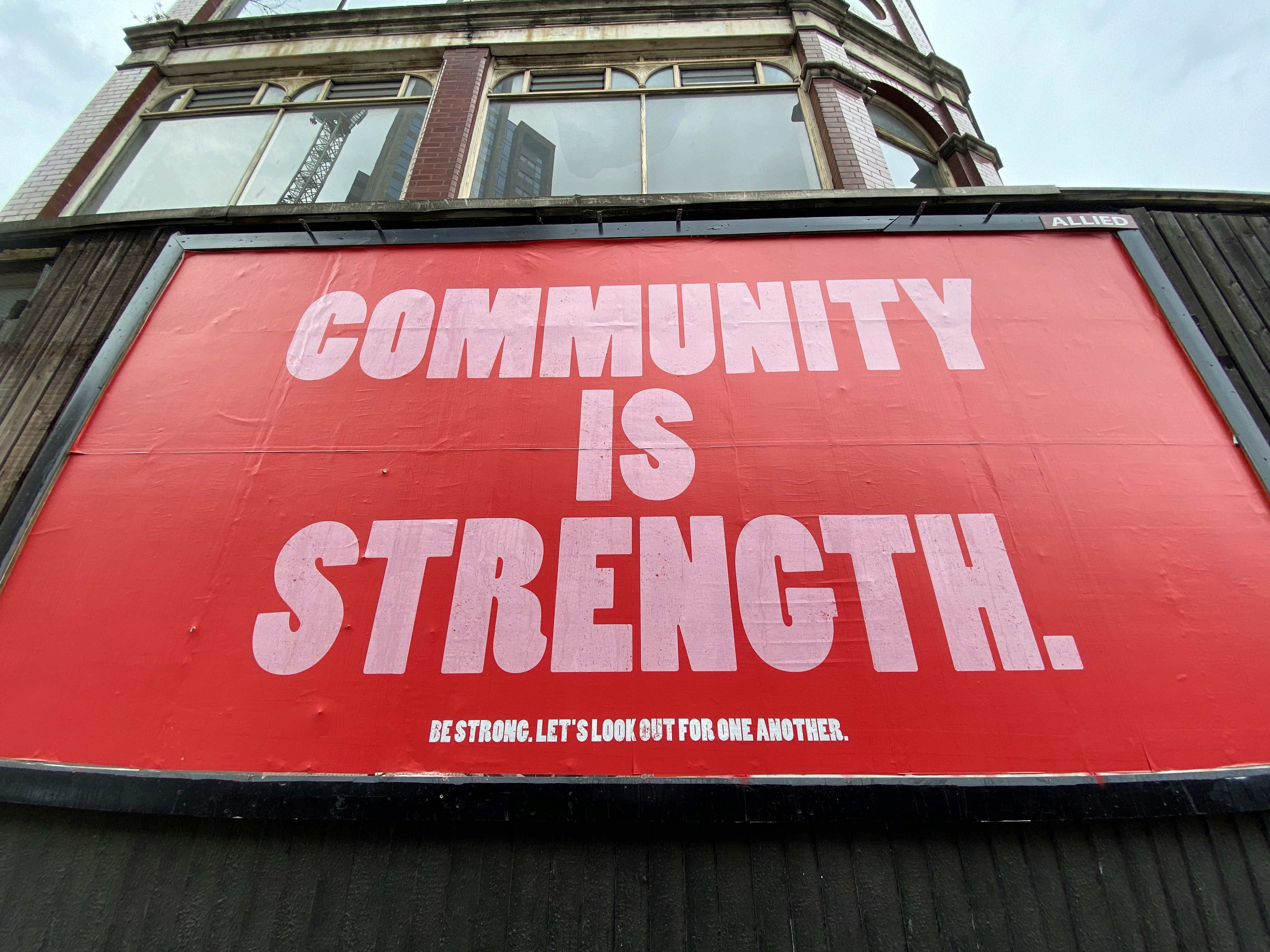
Our response is to ask how we can become more interdependent on each other, how we can love our neighbors, and how we can build stronger bonds in our communities. I don’t think that most of us have the capacity for large projects. I’m thinking about things like donating food, volunteering where we can, sharing resources with others, and building understanding when possible.
I continue to invest time into artistic projects like oil pastels and woodworking because these are skills I can use to help others, to give people gifts they enjoy, or to pass on creative skills to others.
Of course, there’s the daily practice of prayer as well, working hard to let go of the anger and despair that so easily takes hold and creating a clear space for God to speak into my life. Although I remain devastated by the horrible failure of Christians in America to hold such an evil man in power to the basic standards of moral decency, we can find renewal to love our neighbors if we remember how deeply we are loved by God.
I’m not offering a perfect path forward to help us make it through this terribly perilous moment in our country, but we have to start somewhere. The place I’m starting is recognizing the temptation to become overwhelmed by the flood of anger and negativity in this moment and then embracing practices that move me toward a healthier, more sustainable place.
If we can end today by saying no to despair and yes to love and community, we will have hope to continue when the sun comes up tomorrow.
I’m the author of Flee, Be Silent, Pray: Ancient Prayers for Anxious Christians, Reconnect: Spiritual Restoration from Digital Distraction, and other books. I write about prayer and spiritual restoration at http://www.edcyzewski.com.
I completed the following Sermon for St. John’s Episcopal Church in Murray, KY on the Friday before Federal ICE agents publicly executed Alex Jeffrey Pretti while they had him pinned to the ground. However, my sermon references similar cases of violence committed by federal agents and the propaganda of the current administration, and so I did not revise the content to mention him specifically. In addition, I recorded the sermon on Friday evening for my church in case a winter storm caused a power outage in our town.
Sermon for January 24, 2026
Matthew 4:12-23
Some of the most transformative moments in my life were the times when someone treated me better than I deserved. I knew I had failed others, but their mercy and forgiveness quickly pulled me out of my shame.
I once worked at a nonprofit with an extremely challenging director who wanted our marketing firm to send out a series of press releases to the local papers. Before doing that, our director had to give them all the thumbs up.
I was the main point of contact with the marketing firm. Yet, they weren’t replying to my emails or moving fast enough for our director’s liking.
When our director nagged me once again about the press releases, I snapped and sent him an email that was extremely critical of our marketing firm’s responsiveness. That was a teeny, tiny, HUGE mistake. He immediately forwarded my message to the marketing firm, copied me on the message, and added that we needed to work this out.
As you can imagine, I felt like an idiot—a common theme in my 20’s. I was unprofessional and threw them under the bus because of our director. I wrote a very sincere apology, and the lead copywriter immediately replied that it was water under the bridge now. We could move on.
He would have been justified to tear into me. I deserved it. But he very kindly replied immediately and moved on. In the midst of my shame over my failure, his forgiveness was a ray of light that helped me move forward.
We read today in the Gospel about Jesus being a light to people who were living in a land of darkness. I think we all want light and hope to come, but the light and hope that comes in today’s Gospel may give us pause.
While it’s true that people who lived in the ruins of the exile and suffered under Greek and Roman rule had God’s light among them, how much were things about to change? Were their lives about to become significantly better? Were they hoping for something different from what Jesus offered?
And while I’m sure the disciples Jesus called would all say that they wanted God’s light and salvation to come, they also had to make significant sacrifices. They would have to face dangers among violent leaders that made a storm on the sea appear quite tame.
And what did the people who saw this light of God’s hope think? I’m sure they were happy to experience healing and listen to Jesus, but wasn’t all of the healing just a band aid on far more serious wounds that had accumulated over time? And the message from Jesus to repent was directed at them. Why didn’t he tell the Romans to repent first?
As they experienced injustice and suffered the indignity of yet another military occupation in a long history of them, what in the world did they make of Jesus? He seemed promising, but he also was likely confusing, frustrating, and even appeared a bit dangerous. He spoke of God’s kingdom without actually challenging the Romans.
Change was coming, but was it enough?
And let’s not forget that Jesus called men who were largely unlearned, rough fishermen. These weren’t sophisticated, well-spoken, theologically astute, politically savvy men who could wow a crowd. Even after 3 years with Jesus, the book of Acts notes that their lack of education was hardly a secret. What was Jesus thinking by calling this group of misfits to support his ministry while his cousin John, a legit prophet, languished in prison?
Most people in America today have not suffered anything close to what the people of Israel endured throughout their history of military calamities, oppressive rulers, brutal exile, and the daily deprivations of military occupation. If they had any hope left for God to deliver them, it was likely quite faint by the time Jesus showed up on the scene.
The people of Israel, especially in the northern region around Galilee, had suffered a great deal over past and present generations.
And let’s admit that we can understand why they would have found Jesus perplexing. He healed people of their personal sicknesses, but did he address the sickness of their nation? He spoke of God’s Kingdom, but he left John in prison while scraping the bottom of the barrel in their society for his help.
If we let ourselves ask the hard questions that this passage demands, we can see the extreme tension of this moment. Light has come up against darkness, God’s Kingdom has appeared at a time of Roman domination, and Jesus has told the Jewish people to repent as God’s Kingdom draws near.
Jesus started a movement that could only work if his followers left behind the resources of this world and trusted in God. The more they relied on their own plans and resources, the more likely they would turn to greed, political power, or violence for solutions.
We recently celebrated the life and legacy of Martin Luther King Jr. and the Civil Rights movement. While a moving quote on social media may make us feel inspired for a second before the next video clip steals our attention, let’s not forget that King and his Civil Rights colleagues were staring down some of the most concentrated, unfiltered forms of evil that ever walked on earth.
The opponents of Civil Rights included men who thought nothing of torturing and killing a person of color who wanted to vote, who bombed churches where children sat in Sunday school classes, and who resorted to any form of injustice or violence that guaranteed their continued domination in society.
Facing this sort of evil without first unloading our burdens and imperfections through repentance is like bringing a pool noodle to a knife fight. Even if the flaws in our hearts seem as nothing compared to the evil we see around us in our world, we need to be transformed by God’s forgiveness and love to live in and contribute to the kind of world God imagines.
Jesus showed us that the kingdom drawing near means the sick are healed, the hungry are fed, our wealth is shared with those in need, and we treat our neighbors with the mercy and love that God extends to us.
We’ve seen in recent days how the unchecked forces of greed, power, and violence can converge in ways that dehumanize others, divide us, oppress our neighbors, and even leave civilians beaten or shot in their neighborhoods.
We have seen the exact opposite of repentance where the victims of violence were blamed for the immoral actions of others. That is evil.
We can’t hope to face these forces of evil and injustice in our world if we aren’t first transformed by the mercy and love of God in our hearts. King and the members of the Civil Rights movement didn’t just share moving quotes to inspire us to be nice to others. They were being transformed by the love of God in order to meet the violence and injustice of their time.
God’s transforming love begins working in our lives when we repent and receive forgiveness. That’s why repentance is especially relevant today.
Speaking for myself here: From the systems of our society that benefit myself while harming others to the ways I have failed others personally, there’s a lot I can bring to God in a spirit of repentance.
Yet, Jesus didn’t want us to stay in a state of repentant sorrow. He called everyone to repent first, but then he asked them to tell others about God’s mercy and pay that mercy forward.
When we repent and receive forgiveness, especially forgiveness that shows mercy beyond what we think we deserve, we can experience freedom. A weight has been lifted from us, and new possibilities emerge in the light of God’s mercy and love.
Repentance is only a first step that sends us on a new path forward beyond our failures and imperfections. It’s the first crack of light in the darkness. And as we call out to our most merciful God, we find mercy and forgiveness.
God knows we need to carry that mercy, generosity, compassion, and love into our world. We can participate in God’s mercy we have received as we face those seeking fulfillment through power, violence, and injustice.
We can participate in the real Kingdom that rules by taking notice of the overlooked, healing the weak, welcoming those in need, and giving power away. Who in our circles of influence can we notice, serve, or welcome?
In recent weeks I have felt fear, anger, shame, and despair. The last thing I have thought about is repenting of my own sins and failings. Yet, that is exactly where Jesus began at a time of far worse injustices and violence.
We come to God to receive mercy, healing, and forgiveness because these are the very forces we can use to restore a world that is drowning in greed, power, and violence.
Click on “Vimeo / Diocese of Kentucky Video Sermons”
Look for Epiphany 3 A Ed Cyzewski and click on it.
Click on the “Play” arrow at the bottom left of the picture
Ed Cyzewski
I’m the author of Flee, Be Silent, Pray: Ancient Prayers for Anxious Christians, Reconnect: Spiritual Restoration from Digital Distraction, and other books. I write about prayer and spiritual restoration at http://www.edcyzewski.com.
While I was working as a freelance editor primarily for Christian clients, a pastor set up a meeting to discuss his book project idea. He arranged a video call with several other people from his team, which was a first for me. I could see he meant business.
Most pastors, especially the male ones, come to me about publishing a book that’s based on a sermon series. The combined power of a few people patting them on the back, saying it was great, and the romanticism of publishing a book propelled them to reach out.
With that in mind, I was surprised when this pastor said he wanted to write a book on marriage. My first thought was, “Uh, oh.” My second thought was, “Well, let’s see where this goes.”
I started by asking if he had expertise in marriage counseling, such as specific training and dedicated experience in that area. He didn’t have that.
Realizing that he was not exactly enthusiastic about my question, I felt obliged to ask another question that he was even less enthusiastic about.
“Do you know an expert on marriage you could write the book with?”
The call didn’t last too much longer after that, and I never heard from him again.
I can’t blame this pastor for thinking he could write a book about marriage. The Christian system of expertise, whether in churches, publishing, or media in general, is deeply broken.
Pastors are expected to be experts on many different things, even though most of them only have a generalist Master of Divinity Degree. They can perhaps claim modest expertise when interpreting a collection of ancient documents that date back 2,000 years or more.
That’s hardly the sort of expertise called for when giving marriage advice.
And yet, pastors who are married and occasionally advise married couples based on a class or two in seminary may think that experience combined with their “authority” for interpreting the Bible makes the cut.
They presume they can apply the Bible to relationships today despite the challenges of applying ancient texts, that required head coverings for women and regulated slavery, to the modern world. Congregations often accept anecdote driven advice based on ancient texts in sermons without batting an eye, so why would a book be any different?
In too many cases, books promoted by the Christian publishing industry aren’t any different from the anecdote-driven, suspect interpretations delivered on Sunday mornings. A pastor, who is regarded as an expert by a congregation, whether or not that is actually warranted, can slip right into the role of an expert in the publishing world provided he (it’s typically a he, at least) can demonstrate a large enough following to guarantee a good print run.
Sometimes, even this flimsy anecdote-driven expertise isn’t required if the author has a large enough platform.
Exhibit A for this would be Joshua Harris, the darling of the homeschooling movement and purity culture who wrote a wildly popular dating book without actually practicing the advice he gave in the book. The platform bestowed by conservative Christians guaranteed robust book sales, and thus no one worried about his lack of expertise or even his lack of any experience at all.
More recently, Elizabeth Elliot has been highly scrutinized for sharing dating and marriage advice while living in a controlling, emotionally abusive marriage. The tragedy of Elliot’s personal life was compounded by the ways she passed on terrible advice to women who were suffering in similar or worse relationships.
All the while, the Christian publishing and conference industry concerned itself only with her robust book and ticket sales. Did anyone pause to ask whether a former missionary with a murdered husband had the expertise required to guide young people in their dating choices, personal holiness, or marriages?
Elliot had a compelling story that was certainly worth telling, but she wasn’t an expert in dating or marriage. Yet, the Christian publishing and media industry leveraged her compelling story into a massive money-maker fueled by Elliot’s personal anecdotes and biblical interpretations.
Pastors and Christian authors can do many good things for us, but few are marriage, relationships, or dating experts. There are Christians who have dedicated themselves to these specific topics and are far more likely to give us valuable and useful advice.
These Christians with psychology or other related degrees may not have the generalist training in biblical interpretation that an MDiv provides a pastor. However, they won’t make the tragic mistake of turning their personal experiences into wider experiences for others to imitate. They can spot toxic relationship trends, real warning signs in a marriage, or healthy practices to nurture in a relationship.
Our expertise in American Christianity is often tied to position and social platform and relies heavily on anecdotes, (sometimes) a flimsy master’s degree, and (often) suspect biblical interpretations.
If I sound too harsh in calling this an expertise crisis, take note that the books by Elliot and Harris remain on sale to this day despite their expertise being shot full of holes. In American Christianity, profit and influence can fill in all the expertise a public figure lacks.
Ed Cyzewski
I’m the author of Flee, Be Silent, Pray: Ancient Prayers for Anxious Christians, Reconnect: Spiritual Restoration from Digital Distraction, and other books. I write about prayer and spiritual restoration at http://www.edcyzewski.com.



 Ed Cyzewski: Author // Contemplative