
It’s Always Jesus Plus Something

Jesus plus nothing image

“Jesus plus nothing” is a mathematical impossibility for our beliefs. 

I’ve started watching The Family on Netflix, a dramatized documentary of the Jeff Sharlet book by the same name. I always thought that I wouldn’t need to read Sharlet’s book because I knew enough about the dark underside of American evangelical Christians and politics.

I was extremely wrong.

Sharlet describes something larger than a secretive group seeking to influence politicians on specific policies through their offers of spiritual counsel and support. There is a kind of fraternity of young men who are trained on the surface to be simple devotees of Jesus alone while absorbing an extremely toxic authoritarian theology that believes these men are set apart by God to do great things, placing them on a level above the common person.

I have long wondered why so many evangelicals in politics don’t believe the rules apply to leaders exercising great power. This is because their status as leaders proves their blessing from God and thus overrides the other moral teachings of the Bible in service of the “higher” call to lead.

There is more than enough judgment for a woman who is labeled as a Jezebel or a “loser“ “brother” who leaves the group. Yet, a powerful Christian leader affiliated with the Family who lies, cheats, rapes, swindles, and commits any other sin to satisfy an insatiable pit of greed or envy is above all judgment and rebuke by virtue of his power and position.

This is an extreme form of Calvinistic fatalism that places virtually unlimited power in the hands of those presumed to receive it via divine decree.

The young men described in The Family have a well-meaning but malicious naivety and simplicity about the Bible made all the more menacing because of the rigid authoritarian structure imposed under the guise of brotherhood and fellowship. They claim to have a simple faith that is Jesus plus nothing, but in applying this formula to real life, there is a millstone’s worth of additions to this formula.

No matter how hard we try, something else will always spoil our illusion of clear vision.

If we dare to believe our faith is Jesus plus nothing, there most assuredly will be Jesus plus something.

Since it’s bound to be Jesus plus something, then we need to interrogate what that “something” is that we attach to Jesus. We have roots to our faith. Some roots are deeper than others, but each person who claims to only follow Jesus is living in an illusion of purity and clarity while carrying the obscurity of what has been passed from others.

When I read the story of the Prodigal Son, I don’t read it as a story of immigration and migrant labor. That’s because I read the Bible as a Christian with Jesus plus something, namely American prosperity.

When I read the story of Elisha and his care for widows and mothers in their times of need, I didn’t notice the ways that God was countering the unjust patriarchal systems of the time. That’s because I read the Bible as a Christian with Jesus plus something, namely white male assumptions of power.

When I read the story of the Good Samaritan, I tend to focus on the ways I can be a good neighbor rather than recognizing the ways prejudice and racism in my life prevent me to see how God is working among other races and nationalities. That’s because I read the Bible as a Christian with Jesus plus something, namely the assumptions of white privilege in a culture still influenced by white supremacy.

That isn’t to say that our goal to remove the things that obscure our vision of Jesus is hopeless. And there is still a space for simple practices of spirituality. In fact, I would argue that theology will be more complex than we would hope or believe, while our practice will most likely benefit us most if it’s simpler than we expect.

The people involved in the Family and other conservative branches of the faith tend to insist on keeping the beliefs simple, while imposing complex hierarchies and practices that seem to have a vague biblical grounding. Yet, these leaders insist that they are above scrutiny since there isn’t much to scrutinize. They just believe in Jesus plus nothing–and a long list of practices and rules and hierarchies that allegedly stem from Jesus and dare not be questioned by the rank and file lest they undermine their God-appointed leaders.

Jesus plus nothing gets complicated immediately.

In my book Coffeehouse Theology, I argue that we can have a simple faith and trust in Jesus, but it is necessary to also analyze, if not interrogate all of the other things we add to our faith on our own.

We each add something to our approach to Jesus based on our faith background, experiences, and awareness of other members of the faith. That doesn’t have to be a bad thing.

If anything, that should leave us humble and aware of our deep need for God’s mercy and the guidance of the Holy Spirit.

We should ask more questions, not less, about our beliefs, but in the day to day grind of life, we can practice a simple faith and trust in our Lord who is present and with those who call out for guidance and help.

If we have any hope in holiness and conversion, then we will surely need to rely on Jesus alone–although even our practices require discipline to set aside time and attention for God. If we hope to be present for Jesus without our assumptions and cultural baggage clouding our view so drastically, then we need to figure out what those somethings are and address them with clarity.

It’s never Jesus plus nothing when it comes to theology. It’s always Jesus plus something, and that something will change how we see Jesus until we figure out what it is.

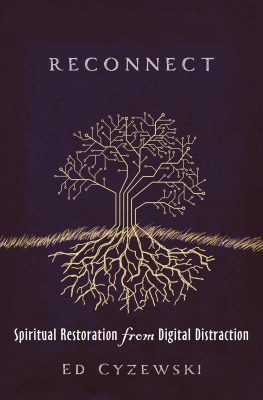
 

Photo by StellrWeb on Unsplash

Social Media Puts Me in a Position to Lose, So Now What?

When I log on to social media, I feel like I’m destined to lose.

Not to brag, but I follow some really smart and interesting people. It’s tough to stop scrolling through their posts, often to my own detriment. There’s only so much you can learn while scrolling through social media.

The infinite scrolling feature on most social media sites ensures that I’ll literally never run out of something else to find, not to mention the promise of refreshing my feed for the latest posts.

Then there’s the matter of notifications, because who can resist a bit of affirmation? I can get a daily dose of likes and compliments if I play my cards right and avoid controversial topics.

Two unhealthy false versions of myself face off, as the lazy, distracted side of myself meets the side of myself that craves to be viewed in a positive light as an insightful writer.

I can’t afford to let either fabrication override my true self that is a mix of both and a whole bunch of other things. That’s why I’m so uncertain about what to do with social media these days.

I’ve studied the tricks that include red notification buttons since red gets the most engagement, auto-playing videos that make it as easy as possible to keep watching, a spinning update wheel that resembles a slot machine when refreshing a feed, and even a slight delay in revealing notifications in order to build suspense.

I know all of these tricks, and yet I feel sucked in by them. Knowing that the creators of the red notification button and the infinite scroll buttons can’t resist them either makes me feel better, but only drives home the point that with social media the average user is destined to lose to the engineers because the engineers are even beating themselves with their design.

I simply don’t know what to do with social media. It’s conventional wisdom in marketing and publishing circles that Facebook offers great engagement per post, but I’m not sure how present to be when I know that I am more likely to lose time, attention, and focus when using social media, let alone my concern for other social media users.

Perhaps the question is this: What do we hope to gain from social media? And then there’s a follow up question about whether it’s actually delivering those things.

Is social media promising us a certain level of connection and interaction and then pulling a bait and switch with extremely addicting features that make it difficult to stop and do something else more beneficial with our time?

If our goal is to deliver a lot of data and view a lot of ads, then social media is working just fine as it is, but I don’t think the goals of social media companies line up with the best interests of their users.

As of right now, I’m not sure how to use social media, but I sure about how to not use it. I’m using time limiting apps, blocking apps, and tracking apps in order to keep my usage under control even if I can’t make good choices in the heat of the moment.

If the makers of social media are devoting so much time and so many resources to capturing our attention and time, it’s time for us to use time and resources in order to guard our attention and time.

Reconnect with Soul Care

I’ll be sharing more about these ideas in my newsletter and in my book, Reconnect: Spiritual Restoration from Digital Distraction.

Sign up here

Order Reconnect Today

Reconnect_2

Photo by Rami Al-zayat on Unsplash

How Habits Can Help Us Pray

I stumbled into the practice of the best practices of habit formation backward as I began to make more space in my life for prayer. I found the connections between spiritual practices and habit formation after the fact, reading books like The Power of Habit and Atomic Habits when certain prayer habits had already taken root in my life.

As I read these books on habit formation, I couldn’t help thinking that I really could have used them as I was getting started with a more regular prayer schedule. As a disclaimer, it would be a mistake to reduce spirituality to a simple habit-based schedule, nor do I limit my prayer to certain times or practices.

One of the reasons I struggled to make space for prayer was my lack of habits to add order to my life. Habits aren’t the silver bullet for prayer or other spiritual practices, but they offer a useful place to make space for prayer on a smaller scale than say a more rigid monastic community.

Here are a few ways that habits can help you make more space for prayer.

Set a Time and a Space to Pray

This is nothing new or revolutionary, as Christians have been praying at set times for centuries, to say nothing of the Jewish roots of Christianity. A set time for prayer in a specific place makes it significantly easier to pray since my body now seems to almost know instinctively what will happen next at specific times and places.

Begin Small and Grow in Prayer

I began to pray in silence for just a few minutes. That grew to five minutes, and then over time I experimented with ten, twenty, and even thirty minutes. Habits are more likely to stick if you can start small, keep consistent, and then increase the time for the habit.

It helped that I invested time in learning how to pray, such as the practice of centering prayer where a simple word offers a way to refocus my intention to be present for God.

I used to think of myself as a failure if I couldn’t pray for a long time, but James Clear emphasizes in Atomic Habits that it’s far more important to keep a streak going for a habit than to skip it if I can’t do it perfectly. If I only pray in silence for a few minutes one day, that at least maintains the routine of praying daily and makes it easier to begin again the next day, hopefully adding more time.

Give Yourself a Prompt to Pray

A prompt is a reminder or cue that helps me remember what I intend to do. For instance, I leave my running clothes out in the morning as a reminder to run–that also makes it easy to choose to run.

Leaving my prayer book out helps me remember to pray each morning, while driving my car in the morning also helps me remember to spend some time sitting in silence. The “prompt” is as simple as turning my car on and then sitting in silence for 5-10 minutes. It took discipline to make prayer a habit in the car each morning, but now, it is far more automatic and requires less willpower.

Make It Easy to Pray

Closely related to the prompts or cues pray, making it easy to pray ensures that I remove any barriers or distractions. For instance, I don’t have to look for my prayer book because it’s already out. I don’t have to force myself to choose a time to pray because I have chosen some simple cues.

I sit in silence when I turn the car on in the morning, or I open my prayer book before I begin my work in the morning. It’s not hard to pray at these times, and while these aren’t the only times I pray, I have set moments throughout the day where I make it as easy as possible to choose prayer.

I’ve already made the choice to make space for prayer, so it’s not major decision each time I think of praying.

Consider Your Motivation to Pray

My motivation for prayer called for deeper scrutiny than I had imagined. I share in Flee, Be Silent, Pray: Ancient Prayers for Anxious Christians, that I had prayed because of fear, duty, guilt, and obligation. I imagined that God was disappointed in me because I was such a slacker who never prayed enough.

I hadn‘t considered that God was already present and loving, accepting me as I am and craving an intimate relationship with me.

Moreover, the simplicity of the Christian contemplative prayer tradition pulled me away from a performance mindset where I tried to demonstrate my piety or commitment. While silence or centering prayer aren’t the only ways I pray, they have been the most healing for me as I learn to turn to God in faith, waiting patiently in silence for the Lord.

While habits aren’t essential for making space to pray, they can make it significantly to find space each day for prayer. I have found that the best habit formation practices have a lot in common with the schedules of monks and nuns, and it seems that they may have a thing ten to teach us about making space for prayer and work.

If you aren’t sure where to begin with prayer, it may help to rethink your spiritual practices as habits that can start small and grow over time.


Photo by Ümit Bulut on Unsplash