Guest Post for Micha Boyett: How The Examen Empowers Us to Pray and Write

15_02_13_PrayWriteGrow copy

I’m guest posting at Micha Boyett’s blog this week to talk about prayer and writing, which is pretty much right in her wheelhouse. I met Micha back in 2012, and was totally blown away by the pitch for her (then) upcoming book Found (as of this moment, it’s $3 on Kindle!). If you haven’t read it yet, I think quite a few of us will really relate this book’s stories about her struggles to pray while parenting little ones.  I’m honored to write at her blog about the Examen and how it has transformed both my prayer and writing: 


When I try to pray, I often find that my anxious thoughts get in the way.

When I try to write, I often find that I can’t form a single thought.

It feels like feast or famine most days.

How can I face my thoughts for prayerful contemplation without getting swept up in anxiety and worst-case scenarios?

How can I hang on to a few thoughts that are worth exploring through writing before the blank page wins?

Thankfully I’ve found that one practice can help with both problems. The Examen, developed by St. Ignatius of Loyola, offers a lifeline to stressed out, over-thinkers like me, while coincidentally prompting writers to address what matters most.


Praying with the Examen

Ignatius believed the Examen was a gift given directly from God. After spending a significant time in prayer, he found that prayer could move forward best with this time of reflection and meditation.

The Examen is set apart from run of the mill self-reflection right from the start by its first step: Awareness of God’s Presence. We don’t face the most challenging parts of our lives alone. God is with us as we begin the Examen, and as we move forward into it, that awareness will only grow. In fact, the Examen encourages us to invite God into our days and our times of reflection.

The genius of the Examen is the way it stops the roller coaster of worry and distraction when I begin praying, while still offering a path forward. It provides an orderly, prayerful direction to my thoughts so that I can honestly face what I’m truly thinking without feeling restrained.

Read the Rest at Micha Boyett’s Blog.

Guest Post for Michelle DeRusha: Where Do We Start with Prayer?

15_02_13_PrayWriteGrow copy

I’m guest posting this week for my friend Michelle DeRusha, the author of the fantastic books Spiritual Misfit and 50 Women Every Christian Should Know. I’m sharing a guest post based on my new book Pray, Write, Grow: Cultivating Prayer and Writing Together. While I suggest in my book that prayer practices can help us write, we first need to sort out where we’ll begin with prayer:


One of my most intense moments in prayer started on a whim.

I sat down to pray in our living room one morning, and for some reason my mind kept venturing back to the moments of my deepest shame.

The relationships I’d messed up in college.

The many stupid things I said during our first year of marriage.

The time (times?) I placed unreasonable expectations on a good friend.

As I squirmed and fretted over my shame, I had a “revolutionary” thought: “What if I just prayed as if God knew all about this stuff already?”


We Bring Our Vulnerabilities to Prayer

I’m not breaking new ground when I say that we can’t hide anything from God or that we don’t have to be perfect in order to approach God. That’s pretty much covered from most pulpits on Sunday morning.

Actually living as if we have nothing to hide and God still loves us is quite another matter.


Read the Rest at Michelle DeRusha’s Blog.

Releasing My New Book: Growth in Prayer and Writing Starts in the Same Place

15_02_13_PrayWriteGrow copy

Today I’m releasing my latest book, Pray, Write, Grow: Cultivating Prayer and Writing Together. This book combines the questions: “How do I find more time to pray?” and “How can I improve as a writer?” What if you could grow in both prayer and writing at the same time? What if the time you invested in writing could help you pray, and the time you invested in prayer could help you write? Here is part of the opening chapter that begins to answer those questions:


Every time you bow your head in prayer, open up a blank document on your computer, or flip open a journal page to write, you’re taking a leap of faith. Writers choose to believe they can string together another series of sentences that will speak to the needs of readers somewhere. When people pray, they’re choosing to believe there’s a good, loving God reaching out to us, listening to our prayers, and meeting with us.

We have faith that the discipline of writing will pay off. If we keep working at it, keep practicing, keep asking for feedback, keep revising, and keep publishing our work wherever possible, we’ll get better, reach more readers, and take meaningful steps forward. If we face the most challenging and vulnerable parts of our lives, we have faith that we’ll find words that offer clarity and perspective. If we put our words in front of readers, we have faith that some will reply, “Yes! Me too!” If we take the time to continually examine ourselves and care for ourselves, we have faith that the words will continue to come together year in, year out, whatever life throws at us.

We have faith that the practices of silence, praying with scripture, or reciting the prayers passed on to us will bear fruit over time. If we continue to fight through our fears and anxieties in order to sit in silence, we trust that God can meet us, even if it leads to results we aren’t expecting or doesn’t even result in quantifiable progress.

If we continue to cultivate habits of stillness and quiet throughout the day, we have faith that God can meet us and will speak even at moments when we aren’t expecting to hear anything. If we continue to wait on God, we have faith that periods of silence don’t indicate God has abandoned us.

We can even have faith that growing in one practice could lead to growth in the other.

Every time I grow as a writer, my prayer time receives direction.

Every time I grow in my prayer time, my writing has increased clarity.

Writing and prayer stand well enough on their own, but many of the disciplines that help you write better will also help you pray better and vise versa. This wasn’t something I planned out. I never set out to find connections between the two. Rather, I spend significant parts of each day writing and praying, and at a certain point I started to notice how the two converged.

As I prayed, my writing started to shift and grow. Both the disciplines of prayer and the lessons I learned transferred over to my writing, and my writing furthered my personal reflection and helped foster the habits and disciplines I’d been cultivating while praying. When prayer and writing finally started working together in my life, I began to take significant steps forward in both simultaneously.

I suspect that both prayer and writing can offer a lot of benefits by themselves. I certainly don’t think you have to do them together. However, if you’re already inclined to both write and pray, you may as well figure out how they can help each other. And if you’re experienced in one, you may find opportunities for personal or spiritual growth by trying out the other. I would even go so far as saying it like this:

If you want to improve your prayer life, try writing.

If you want to improve your writing life, try praying.

The two require many of the same practices, disciplines, and virtues. Of course you should certainly only pray out of an interest to meet with God on a deeper level, just as you should only write if you have something to say or process. I’m not trying to tap into the commercial writing potential for prayer or to guilt the reluctant into writing. Rather, I want to drive home the point that prayer and writing not only happily co-exist, but also feed off of each other and can benefit each other.


Order your copy on Amazon for $1.99 until March 16.
(regular price $3.99)

Nook | Kobo | iBooks | Print

Download a Sample PDF.

Read the reviews at Goodreads.

Author Matt Appling Discusses Infertility in Plus or Minus

PlusOrMinusSmallCover

Infertility is one of those topics that can be particularly daunting to discuss for those of us who have never been through it. That’s why I’m so grateful to host author Matt Appling here for a brief discussion of his new book that he co-authored with his wife: Plus or Minus: Keeping Your Live, Faith, and Love Together Through Infertility. Matt is a fantastic writer, and I encourage you to pick up a copy of their book at the end of the interview:


What kinds of books are out there on the market addressing infertility and what prompted you to write your own?

There are a lot of books on infertility, but as we were going through our journey and looking for encouragement, it was the gaps in the market that we thought we could try to fill. A big chunk of books are about how to cure infertility – the “self help” type of books. Eat this, don’t eat that, do these things and have a baby as quickly as possible. There was another segment of books that were more faith oriented, but again, we saw a big share of them that were saying what the medical books said, but in a spiritual way: “Say this prayer, do this thing, and God will give you a baby.” Very little of the literature is directed at men – as if men don’t really want children and are just along for the ride. If men are acknowledged, it’s often in a separate chapter.

We wanted to write a book for couples, not just women, about how to survive infertility in your faith, love and relationships. There are no guarantees with infertility, like all of life. You can buy all the self-help books, visit the best doctors, and still might not get a baby out of the deal. So we started with the question, “What does it look like to survive infertility, no matter what the result is?”


Talk about the process of writing this book with your wife.

IMG_6402It was a process of major trepidation! When I brought up the idea with Cheri, we had to put it on the shelf for a few months so we could pray and think about it. We also knew that this book could not just be us. We asked some friends to come along with us and share their stories and wisdom. The book simply would not have existed without them. We knew that we had not done the most or suffered the longest, we just had an opportunity.

Our collaboration came in the form of discussions, which was just a continuation of the many long conversations we were having relating to our treatment. I was the principal writer, but it was a conversational back-and-forth all the time. It was certainly nerve-wracking for me – my wife can be one of my biggest encouragers and one of my toughest critics! The book ended up being about 60,000 words, but I had to trash another 15,000. Yes, my writing process is not very efficient. But the first time Cheri read the whole manuscript through, she wept the whole time for our friends who had suffered so much. It was very cathartic to work together on something so personal.


Why should couples not experiencing infertility read your book?

Some of the best words of encouragement I’ve received have been from couples who have not had this problem! We spend an entire chapter on discussing modern family life and how our idea of “family” has evolved into what it is today. Besides that, we feel that all marriages are going to suffer through some kind of season – of sickness, of financial distress, or something else, and what we gleaned from our season can be applied to other situations and help to put things into perspective.

We also hope that couples will not only be able to support their friends or the couple in church who is suffering, but that they will look at their own children a bit differently. Life is a wonderful, terribly complex thing, and our journey gave us new eyes to see that.


What are some tips for being sensitive to the needs and experiences of couples who are dealing with infertility?

The first thing you can do is to watch what you say.

Infertility is just not in our cultural vocabulary, so even when we put our feet in our mouths, we usually don’t know it. We see a childless couple and never assume that they are having problems, so we jump to questions about “When are you having kids?” and the like. We had some really personal questions directed at us by people who assumed we were just waiting for a long time.

Acting as an armchair fertility doctor is never really helpful either, so tips like “just relax,” are not necessary. Just express that you are praying for your friends, and then find some other topic of conversation other than your own children! Many of us can be okay around our friends with children, but try to have conversations about something besides the kids.

Just to illustrate that people don’t know what to say about infertility: a couple of months ago I was at an authors’ event and the very first person to approach my table had a child clinging to her leg. I told her about my book, which was upcoming at the time, and she said, “Pffft…I wish I was infertile.” My jaw dropped and I may have laughed a little to ease the tension, because that’s what I do, even when other people are offensive. But she never caught herself or realized how wildly inappropriate that was. I should have referred her to a doctor who could help with her problem!


This book is quite a departure from your previous book on creativity. Tell us a bit about that book in case folks aren’t familiar with it. 

Life After Art was my first book with Moody Publishers. I drew from my experiences as an Art teacher in rediscovering creativity as a source of spirituality. I am still teaching Art, still loving it, and still rediscovering every day the things I wrote on those pages. It’s a book that’s even more for the adult who doesn’t feel they are creative, who had teachers who told them that Art wasn’t “their thing,” the adult who feels stuck in life or work and just doesn’t know why. We all are made to be creative – it’s just a matter of finding out how.


Thanks Matt and Cheri for this extremely important book!

Learn more about Plus or Minus.

How to Market a Book with Integrity: A Christian Author’s Struggle

On-being-writer-writing-life

My friend Charity Singleton Craig is guest posting today about the lessons she and co-author Ann Kroeker learned as they released their latest book On Being a Writer. In particular, she shares how they tried to make the marketing process less miserable—even fun at times. If Ann and Charity can’t make book marketing fun, I don’t know who can!


I’ve never been part of a publishing industry that comes knocking on writers’ doors with large advance checks and the opportunity to just be our introverted selves and write. Never once has someone told me, “You just focus on the words; someone else will worry about the sales.” In fact, conventional wisdom tells us just the opposite. Make sure the writing is decent, but your marketing strategy and platform need to be excellent.

And you’d think that would be fine by me since in addition to being a writer, I also provide marketing services to clients. I have no problem giving them the tools they need to explain their services and connect with potential customers.

When it comes to selling myself, though—which is really what an author needs to do if she plans to write more than one book—the whole business seems a little slimy. I don’t know any writers who think or feel any differently, but if participating in a sales strategy is a necessary part of the writing life, then I needed to get okay with it. And fast.

As my co-author, Ann Kroeker, and I wrote and released our recent book, On Being a Writer, five key elements emerged that have allowed me to sell books without losing my soul.

1. Permission to be myself.

From very early on as we brainstormed ways to spread the word about our book, our publisher, L.L. Barkat, encouraged both Ann and me to choose marketing activities that would allow us to be ourselves. Organizing a big launch team? That didn’t feel like “us.” So instead, we contacted a few individuals privately to help with specific tasks. We also hosted small in-person, launch parties so our friends could come and buy books and celebrate with us. We don’t all have the same gifts and skills—the Apostle Paul reminds the Corinthians of that extensively in his letters to them. In the same way, we can’t all approach book selling the same. That’s not to say that I should never operate outside of my comfort zone. But finding marketing methods that fit best with my personality and desires will ultimately serve the book, the readers, and myself best.


2. Focus on relationships.

When readers become a platform and friends become a strategy, it’s easy to forget that these are people I am building relationships with. Focusing only on what others can do for me is not only a self-centered sales technique, it misses completely the way the Bible says we should love people. Though Scripture is certainly more than a relationship manual, it provides many guidelines for how we as writers should be interacting with readers, publishers, fellow writers, and more. Here are just a few: James warns against favoritism or giving preference to those who are influential or wealthy. Paul exhorts us away from selfish ambition, thinking only of our interests, toward looking out for the interest of others. Peter reminds us that love should be sincere. And Jesus tells us to give straight answers, to let our yes be yes and our no be no.


3. Let each project motivate me.

In On Being a Writer, Ann makes a strong point about what should motivate us to promote our books or other writing projects. It’s advice she actually got from the publisher of one of her earlier books. “Something compelled you to write this message and share it with a broader audience. Right?” her publisher asked. “Could you see speaking [or other promotional efforts] as another avenue to share that same message?” Later in the chapter Ann talks about going on the road to promote that earlier project: “Each time, I kept that idea in mind: the message matters, and I want to get it to the people who need to hear it.” If you just want to write for your own self-discovery or private reflection, keep a journal. But if you have a message or a story or a strategy you want to share with others, publish a book, and then let that message guide you toward telling people about it.


4. Remembering that I am creative.

Not only do we each have unique, God-given gifts, we also are made in His image as creators. Just as we bring all of that creativity to the work of writing books, we can employ it in selling books, too. Don’t use just the strategies everyone else is using because “that’s the way we do things around here.” Try new things. Take creative risks. Let your personality, your relationships, your book itself guide you in new and interesting ways to spread the word. For Ann and me, that came in the form of an early release of our book, a surprise even to us as authors! Without telling us, our publisher released our book several weeks early. Sales were happening, friends were gathering, and Ann and I were nearly the last ones to know! That creative launch gave our early sales a boost, and we had nothing to do with it!


5. Finally, have fun.

After the hilarity of that early release, suddenly Ann and I had a lot of work to do to get the word out beyond our immediate circles. We ratcheted up the intensity, and rather than enjoying the conversations and being thankful for our bit of success, our strategy turned serious. For several weeks, I didn’t have much fun. People would ask how the launch was going, and I’d smile and say, “Great!” But secretly I was wondering whether I really was cut out for the writing life. After a break from the book over the holidays, I came back to our efforts realizing that it was just the intense, serious version of the writing life that isn’t for me. But by injecting a little fun into our marketing campaigns, I can still be focused without nearly as much stress.

Author Neil Gaiman tells the story of some advice he received from best-selling horror writer Stephen King fairly early in his career. When King observed Gaiman’s early success, he told him simply: “This is really great. You should enjoy it.” The thing is, Gaiman wasn’t enjoying it. And he didn’t for a while.

“Best advice I got that I ignored,” Gaiman said. “Instead I worried about it. I worried about the next deadline, the next idea, the next story. There wasn’t a moment for the next fourteen or fifteen years that I wasn’t writing something in my head, or wondering about it. And I didn’t stop and look around and go, this is really fun. I wish I’d enjoyed it more.”

Being part of a sales strategy is now a reality for writers. But it doesn’t have to suck the life out of you in the process. How do you keep your soul while selling books?

Learn more about On Being a Writer: Ten Simple Habits for a Writing Life That Lasts.


About Today’s Guest Blogger

Charity-Craig-authorCharity Singleton Craig is a writer, bringing words to life through essays, stories, blog posts, and books. She is the coauthor of On Being a Writer (T.S. Poetry Press, October 2014), and she has contributed essays to three books, including Letters to Me: Conversations with a Younger Self. She is regularly published at various venues, including The Curator, where she is a staff writer; The High Callingwhere she is a content and copy editor; and TweetSpeak Poetrywhere she is a contributing writer. She lives with her husband and three step-sons in central Indiana. You can find her online at charitysingletoncraig.com, on Twitter @charityscraig, and on Facebook


One last note from Ed:

By the way, my latest eBook, Pray, Write, Grow: Cultivating Prayer and Writing Together (due out March 11th), is available for pre-order at the steep discount of $.99 on Kindle.

Click the cover image below to place your order before the price goes up!

15_02_13_PrayWriteGrow copy


This One Thing Hasn’t Changed Since I Published Coffeehouse Theology in 2008

Coffeehouse-angled

In preparation for the release of my first book in 2008, I decided that it was time to check out this new fangled internet site called “Facebook.” I didn’t really want to join, but the publishing magazines I’d been reading said, “Authors have to join Facebook and then everyone will buy all of the books and you’ll be an amazeballs bestseller overnight!!!”

So now I’m on Facebook for better or worse. I didn’t become an overnight amazeballs bestseller. In fact, very few authors became bestsellers thanks to Facebook. However, I at least managed to follow through on publishing that book, which remains my best-selling and most popular book with readers and reviewers.

I started the book with this simple question: How do Christians determine what they believe?

It wasn’t all that easy to answer.

After reading a good deal of scripture, philosophy, and theology, I wrote a readable little book called Coffeehouse Theology: Reflecting on God in Everyday Life that remains popular with college students and Sunday School classes.

Beginning with the relationship of cultural context and theology, Coffeehouse Theology roots the study of scripture in the church’s mission to advance God’s Kingdom. Far from dividing the church, theology unites the church in a dynamic dialogue about the presence of God, his revelation in scripture, and the wisdom of the historic and global churches.

We all want to read the Bible faithfully and responsibly, taking into account the ways its original context collides our contemporary context today and the traditions we’ve inherited. Coffeehouse Theology can help you do that—at least Scot McKnight said so in the Forward, so take it up with him if you disagree (and yes, I just named-dropped but it was terrifying to ask him to write the Forward as a new author, so there).

I was terrified that Coffeehouse Theology would immediately become a relic of its time and that readers who picked it up in, say, six or seven years would struggle to relate. I worried that I was writing a book that fit purely into the moment, a fad that I would never mention in the years to come.

I’ll admit, there’s a chapter or two that feel a little dated when I peek at them lately, but overall, I’m still really proud of this book. The central ideas still resonate with me:

  • If we aren’t aware of our context or the original context of the Bible, we will be at their mercy.
  • Theology should bring us together in order to learn and grow rather than to engage in battles over who is “right.” (This was the “coffeehouse” part of the book.)
  • Good theology should lead us to action and deeper spiritual formation.
  • We overlook the wisdom of the global and historic churches to our detriment.


Of course this book may not be your cup of tea. I admit, for as many readers who have enjoyed its accessibility, there’s no escaping the fact that it’s a theology book that deals with lots of ideas. If you’re new to theology, it will be a stretch. If you’re a veteran of theology, it will leave you wanting more.

However, for many of us who want to be aware of how we shape our beliefs without reading a mountain of books with tiny fonts and enormous words, Coffeehouse Theology is a good first step that I’m still proud to have written. For all that has changed (and failed!) since I entered Christian publishing, it’s nice to know that my first book wasn’t a complete waste of time!


Best yet, Coffeehouse Theology is $2.99 on Kindle for the first time ever this week.

Download it on Amazon now!


Can you help spread the word?

Here’s a sample tweet for the Twitters:

Download Coffeehouse Theology: Reflecting on God in Everyday Life by @edcyzewski for $2.99 http://ow.ly/GTlZb


And while we’re at it…

My second-most-popular book A Christian Survival Guide: A Lifeline to Faith and Growth, is on sale this week as well for $.99 on Kindle.

Download A Christian Survival Guide here.


Do you have another theology book that has been meaningful or accessible for you? If I had to list a favorite contemporary theology book, I think it would be Renewing the Center by Stanley Grenz.

5 Fun and Irreverent Religious Books that Some Christians Will Hate

NYRMSHD-Cover

Let’s assume that you’re a Christian or you’re interested in religion. Let’s also assume that you like reading books about religious stuff that are a bit fun and even irreverent at times since you aren’t living in a perpetual siege mentality fed by conservative fear-mongering, political divisiveness, and end times madness.

Does that sound anything like you? If yes, then I have five fun and irreverent religious books to recommend for you. Some veer more toward entertainment, while others bring up weighty ideas while making readers laugh along the way. All of them have an angle or tone that our more uptight/under-siege Christian friends will most certainly hate.

Whether you’re looking for yourself or someone else, here are five books to pick today for a fun read:


  1. Flunking Sainthood by Jana Reiss

Mormon writer Jana Reiss digs into the Christian traditions and spiritual disciplines in an ill-fated attempt to learn a new spiritual practice every month. She reads biographies of saints and books that are supposed to provide practical guidance. Instead, Reiss grows annoyed by the anxious striving of some saints and frustrated by the vagueness of others. Along the way Reiss introduces us to important spiritual practices throughout church history—many of which she fails to do.

It’s not that Reiss wanted to fail. She started out this project with sincerity and good intentions, and that’s what makes this book so good. Sticking with a ridiculous spiritual project doomed to failure feels quite familiar to me, even if I’ve never attempted anything on the same scale.

Whether you cringe at her irreverence or you nod your head in agreement, she provides a welcome outlet for evangelicals such as myself who grew up with a great deal of anxiety and pressure to reach particular spiritual goals. For the rest of us who struggle at spiritual disciplines or have our own histories of failures with these practices, this book will provide a welcome perspective shift that just may inspire you to give them another shot.


  1. Do I Have to Be Good All the Time? By Vicky Walker

British writer Walker writes with a blend of self-deprecation and sarcasm that especially appeals to my East coast heritage. For all of our talk in America about the ways British Christians aren’t as crazy as us, Walker uncovers a world of conservative churchianity that should feel quite familiar to American evangelicals where singles struggle to be valued alongside married couples, receive terrible life advice, and end up in unbearably awkward conversations during dates that sometimes end with, for instance, a man confessing he loves to rub cats on his bare chest.

Yes, that is a real conversation in Walker’s book. No, that’s not the only one that prompted me to drop the book in horror/laughter.

While my single friends will no doubt find Walker’s recounting and skewering of the British Christian single culture cathartic, her scope is far wider and will certainly appeal to many. One senses that Walker has ingested a non-stop barrage of dodgy life advice from conservative Christian peers and is using this book to tell them what’s what.

What?

Pop in your monocle and give this book a shot. It’s especially delightful with a proper cup of tea and a scone.


  1. The Year of Biblical Womanhood by Rachel Held Evans

I’m going to assume that most of my readers have at least heard of Evans’ book. Perhaps most of you are sick of hearing about it. However, if you haven’t read it yet, I assure you that you’re missing out.

After being accused by the critics of her first book, Faith Unraveled, that she was picking and choosing which verses of the Bible to obey when it came to faith and gender, Evans’ took up their challenge by obeying everything in the Bible as literally as possible. It’s not just an experiment in interpretation and application, it’s a work of performance art that asks big questions about what it means to be a “biblical” woman. Evans braves conservative books on biblical homemaking, weeps over frustrating crafts, and sits on her roof after growing contentious toward her husband.

Some reviewers didn’t get this project—or perhaps skipped reading it altogether. One conservative Bible professor lamented that Evans would fail his exegesis class. We may well respond that he would fail an MFA course. This isn’t a book about the “right” way to read the Bible. This is fun and thought-provoking exploration of what happens when we follow one theological system to its logical conclusions. If anything, this book is a humbling and humorous reminder that interpreting the Bible isn’t as easy as we think.

If you approach the Bible with greater humility and awe at the stakes of the interpretive task, the laughs provided by Evan’s journey will be well worth your time.


  1. Our Great Big American God by Matthew Paul Turner

Superbly researched and written with a heavy dose of self-deprecating love for our Christian forebears in America, Matthew Paul Turner delivers a surprisingly readable spin through American church history. Written in a style that brings to mind Sarah Vowell (a well-known contributor to This American Life), Turner traces the high points (what some would call “low points”) of America’s church history as he makes the case that we’re just as capable of creating God in our own image.

In fact, the staggering number of images Americans have for God makes this book both delightful and hilarious. While Turner isn’t providing a substitute for the work of scholars such as Mark Knoll and David Beggington, he has more than succeeded in providing a thoughtful and funny commentary on the history of God in America that proved to be one of my favorite books from the past year.

In my endorsement for this book, I noted that Calvinists will really, really hate this book. So that will either warn my Reformed friends to keep far away from this book, or I’ve just issued a dare to give it shot!


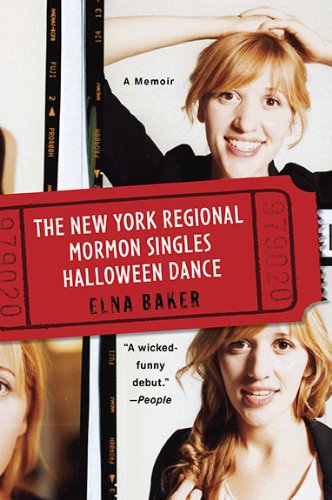
  1. The New York Regional Singles Halloween Dance by Elna Baker

I’m probably most picky about memoirs. And of the kinds of memoirs I read, I’m most critical of religious memoirs. Let’s face it: the narrative arc is typically either:

I had a crazy religious childhood and now I’m done with that.

Or

I had a crazy religious childhood but now I’ve found a way to redeem it.

There are very few books that can succeed in such predictable narrative frameworks. Books such as Traveling Mercies or Girl Meets God provide refreshing alternatives to that script since Lamott and Winner trace their journeys from outsiders to insiders in the church. My friend Addie Zierman’s memoir When We Were on Fire is among the few faith memoirs that has succeeded in providing a truly riveting read, however, Elna Baker’s journey from the Mormon fold into the uncertain terrain of New York City is not only captivating but brimming over with wit.

While mentions of special underwear for married women and specific Mormon beliefs sometimes remind evangelical readers that Baker comes from a different tradition, a great deal of her story will look and feel familiar. Evangelicals will especially relate to her struggles to adopt her childhood faith as her own, the moral struggles of living in a city fully of temptations, and possible ramifications with her family should she leave her faith and/or HAVE SEX.

One could come away from this memoir with the impression that Baker’s story hinges on whether or not she will kiss a boy, but if you come from a conservative religious background, you’ll know that the story is about a great deal more than that. Baker takes us into the nitty gritty struggles that young adults face when their faith runs counter to the majority of people around them.

From cringe-worthy scenes at the New York Regional Mormon Singles Halloween Dance, which is a real thing, to the unbelievable “home meetings” with fellow Mormon singles where an unmarried couple plays the parts of husband and wife hosts, Baker provides a perspective that is simultaneously familiar and foreign. I simply couldn’t put this book down. It’s that good.

If you don’t enjoy it, I’m afraid we can’t be friends.


Disclaimers

Before you rush off to buy all five of these books (why haven’t you already???), you should know that each of the links here are affiliate links on Amazon. It just means I get a small percentage of the sale if you click through and buy a book. I don’t make a lot of money through these links, but every little bit helps. Having said that, buy these books wherever you like. From the perspective of an author, I’m always just happy people buy my book anywhere at all, but if you can support a local bookstore, go for it!

I know a few of these authors personally. We’re not best friends who swap childcare during the week or go out for drinks on the weekend. I’m picky enough about what I read that I honestly wouldn’t read and recommend something that I didn’t enjoy. However, I want to make sure everything I’ve written here is on the up and up.

Do you have a favorite religious book that is funny and irreverent?

Drop in the title and author in the comments below!

Why Hurting Honestly Will Save Them

earth and sky

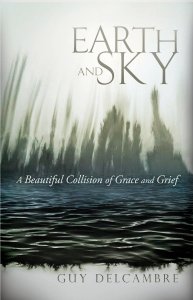
Author Guy Delcambre writes about grief in his new memoir with this powerful reflection: “If you never fully hurt, you never fully heal.” Delcambre lost his wife suddenly in the course of five days, and was left to raise three daughters on his own. He’s sharing a guest post today based on his book about that experience: Earth and Sky.


“Do you get sad still?”

She sat quiet, half leaned into my ribs, lost in four-year-old thoughts, which roam and meander in a world too big. Her sisters cried through stories recalling time with their mom. She cried, too, nearly every night in the year after their mother’s unexpected death. But me, I exerted much of my energies moving beyond her death and growing strong again as fast as I could. This was my duty as their remaining parent: to pick up all the broken pieces and rebuild life. I am a 33-year-old widower, father to three little girls all under the age of eight. I am clueless as to what to do. That was over four years ago.

In the four years since my first wife’s death, I have learned much more about parenting than ever before. More so, I’ve learned myself in ways truer. On mountainous trails teaching them hiking basics and good enough fishing spots where patience delivered their first catch, I discovered how to recognize my daughters’ wanting hearts. My daughters taught me the art of the quick, perfect ponytail. For hours, I practiced on them as they modeled how to gather all the hair together in just the right spot. We celebrated with joyous dance when I finally got the hair band twisted tight enough to hold the ponytail in place. They, too, wanted the future and the warmth of hope that I often told them about, but they needed the past to get there. The past hurt. It reminded me of failure, of God not there where I needed him. Returning to the past scratched counter intuitively across my heart. When I left, I never wanted to return.

Back on the couch, my youngest tucked into my side, contemplating the world her dad knows free of apparent sadness, she taught me one of the most formative lessons to shape my parenting.

“Yes, sweetie, I get sad at times.”

“Well, you hide it really good, Dad.”

As a result of me always being okay and in the busyness of me liberating myself from the hurt of her death, my daughters grew more isolated in their own bewildering grief. Those simple little words of my littlest daughter found me moving ahead alone, leading no one, just in time.

To hurt honestly is to hurt wholly, to admit wrong and to welcome the future through the past. This is what my daughters were missing. Rather than me leading them, they only heard me talk about a foreign place of hope disconnected from the reality of death they knew all too well. Grief piled atop their grief. I was leaving them as well.

“Blessed are those who mourn, for they shall be comforted.” At first glance, blessing coupled with mourning is a bad matched marriage. No one sinking in grief recognizes any sort of benefit in his or her tears, other than the momentary release that serves as a reminder that life has indeed twisted askew. However, the more I mourned, the more frequent the release of emotion proved to be blessing. Mourning guided me through grief. Sharing my hurts and fears and frustrations with my daughters served as guide for them.

Grief is a life-long journey that when committed to can bloom the deepest blessing in the darkest of life. The third Thursday of every November is Children’s Grief Awareness day, an opportunity to raise awareness and affirm healthy grief for children who have experience loss in their little lives. Death can be such a scary life event – in a moment a loved one can disappear into forever without understanding and so much as a proper good bye. Take time to consider those little ones who may be struggling through the lost of a loved one. If not your own, those little ones could be your child’s classmate, neighbor or friend. Revealing your own held fears and hurts about death could very well be their way out.

(*Matt 5:4 ESV)


Pick up a copy of Earth and Sky on sale today.


About Today’s Guest Blogger

Guy Delcambre Headshot1Guy Martin Delcambre is an author and public speaker based in Dallas, Texas, who writes about faith in thin moments, strength found in weakness, and God’s grace immeasurable. Guy was once a pastor, a church planter, and a widower, in that order. From the darkest night in life— the death of a spouse— to learning to live life as a single father to three young daughters, Guy has traveled the greatest distance of the heart to find home in God’s faithful goodness.

He lives with his wife, Marissa, and three daughters, Elizabeth, Emily, and Chloe.

Follow Guy on Twitter @GuyDelcambre.
Visit Guy’s Blog here.


I Can’t Review/Endorse/Blog About Your Book, But This May Help

books to market for publishing

I get emails every week asking me to review, promote, or endorse someone’s book, and it’s an honor to know that someone thinks I’d be able to help them spread the word about their work. It’s also becoming extremely unsustainable for myself and most other bloggers I know to help everyone who asks. I wanted to offer some alternative ideas for authors and publicists in the thick of book promotion and some best practices for working with bloggers:

A Bit of Perspective on Blogging about Books

I’ve been blogging since 2005, and I remember how awesome it used to be when a publisher sent me books for free every once in a while. Sometimes I didn’t care for the books, but the lure of something new was still pretty exciting. However, more publishers and authors started to catch on, and now it’s just been a tidal wave of PDF’s from publicists and authors every month.

Based on the conversations I’ve had with fellow bloggers, most of us now dread getting asked to review books on our blogs. Most bloggers I know dread the drop in traffic from book review posts that eat up hours of time. One friend considered adding a page titled, “Will I Review Your Book?” and the body font had a single word: “NO.” So free books have gone from exciting perks for bloggers to a major time drain now that we receive so many. If you’re promoting a book, you need to keep this in mind: A FREE BOOK IS NO LONGER A TREAT.

Just to put this shift in perspective, if I read, reviewed, endorsed, or blogged about every book I’ve received, I’d never read a book of my own choosing or have time to write about my own ideas. It’s really gotten to that point—especially since I’m a slow reader. Some of the more popular bloggers would never sleep if they read every book offered to them.

Many new authors and publicists will say, “But this book is unique…” or something like that. I get it, but the problem is that to most bloggers, especially the ones with big platforms, every email about a book sounds EXACTLY LIKE THAT. It may be true for your book, but in the split second that a blogger reads your email, the most likely response is, “Not another one…”

I’m an author myself, so I can see both sides of this issue. The good news is that bloggers and fellow authors may be able to help you at times. You just need to rethink your approach.

Make Your Ask Natural

Bloggers can recognize someone who is just trying to make a connection for personal advancement. In fact, when I talk to bloggers with huge platforms, it’s something they dread. They want to help, but they also hate to feel used.

On the other hand, authors and publicists trying to promote books often feel desperate.

When people ask me for ideas on growing their online platforms, I suggest that they try to follow and dialogue with at least 50 people with whom they share common interests. They could have large or small followings. As long as you actually care about that person’s perspective, you’ll be able to have real interactions with them that will benefit both of you.

Your first email or tweet at a blogger should not be a request to review, blog about, or promote your book!!!! This is the kind of thing that bloggers roll their eyes over, but so many new authors and even, unthinkably, publicists make this mistake.

It’s also a major, major mistake to do the following: send a form letter, start off “Dear Blogger,” or fail to mention anything specific about the blogger’s site. I hit delete immediately when a publicity email starts like that.

When it’s time to make an ask, consider what would be appropriate based on your relationship with the blogger in question. Your request should never feel out of the blue. If you think this blogger’s platform is important, why haven’t you been interacting with that blogger on social media and in his/her comments? If you haven’t had the time to do that, why are you asking that blogger to spend hours reading your book and reviewing it?

When it comes to making an ask of bloggers I know, I often ask friends if I can write a guest post that speaks directly to their audience—but that’s something I only ask of friends I know fairly well. You can also offer to do a book giveaway or simple interview (around 5-8 questions). I’m also quick to offer my blog and social media platform to help them with their own projects with the caveat that their book needs to fit my audience. That also keeps me focused on networking bloggers who share the same readers and goals. I never ask bloggers to review my books, and I always offer a few options, such as, “If a guest post doesn’t work, could you mention my eBook sale next week?”

Give people a few options to help you based on their capacity, and give them simple ways to help if your bigger ask isn’t possible or desirable. Most importantly, keep the email short and to the point with a quick pitch about the book, a few ways to help, and a thank you paired with an easy out like, “I understand if you aren’t able to help at this time.” If they can’t help, don’t respond with reasons why they SHOULD have helped—I’m serious, people have actually done that!

Where to Find Reviews for Book Marketing

Unless a blogger specifically blogs about books, I wouldn’t ask for a blog review. Ask for guest posts or organize synchroblogs in order to get noticed on blogs. Here’s an example of a synchroblog and how I wrapped it up. Besides, you need reviews on sites like Amazon and Goodreads.

I would look to your friends on Facebook and Twitter for help with reviews. Are there a few people who always favorite your tweets or like your posts, especially related to your books? Ask them to review your book. Don’t chase the people with the biggest blogs for your reviews. You want to find the people who care the most about your writing to review your books.

While I know that some publishers are a bit hesitant to do this, my perspective as both an author and a blogger is that anyone willing to review a book should get it in any format they desire. I strongly prefer ePub files, but I’ve had so many big name publishers send me the crappiest PDF files that have chaotic paragraph breaks, repeated content, and disjointed headers that ruin the reading experience. I know they’re concerned about piracy, but this paranoia about piracy punishes the wrong people. The vast majority of bloggers and book reviews barely know how to load an eBook onto an eReader, let alone how to download a file to a piracy site.

So be prepared to offer print, ePub, Mobi, or PDF to your reviewers. Thank them profusely and remember that you’re lucky if two thirds of your reviewers follow through. That’s just how it goes.

You can also give books away through Goodreads and Library Thing. Both are reputable book discovery services that have excellent review programs.

The other option for picking up reviews is to set up a free promotion for your book. You can run a free eBook promotion through a few venues:

Give the files away from your site. If you’re an indie author, create the files from scratch using Scrivener or convert your Word file with Calibre. A tool like DropBox has a public file option that you can link to for file downloads.

Organize a Kindle select free promotion to get reviews.

Set up a long term free promotion by marking your eBook for free on Nook, iTunes, and other sites so that Amazon price matches to your free price.

Take a chance on a viral blogging program like SpeakEasy.

Find Amazon’s top reviewers in the Vine Voices program.


Price Pulsing to Promote Your Book

I’ve been told by so many people in publishing that I needed thousands of Twitter followers. However, the problem with Twitter is that it’s hard to get a lot of traction for your book without something that catches people’s attention. You need to tweet something other than: “Buy my book for $15!”

Many authors and publishers are experimenting with price pulsing to gather attention for their books and even switching their topic listings on Amazon in order to reach new readers with each new price promotion. They may drop the price to $.99 or $2.99 for five days and then raise it to something like $6.99 or $9.99 once the book has gotten noticed on some of the lists in Amazon. Price promotions are a simple way to get noticed on social media and to get your book more publicity in Amazon’s internal recommendation system and bestseller lists.

While you’re at it, make a list of eBook discount sites who may tweet or share your deal on Facebook. I would list a few here, but they tend to vary depending on your audience and topic. They typically tweet or share on Facebook new promotions each week. If you want to keep up on the competition in your market, you should already be subscribed to these services any way so that you can get similar books on the cheap.

You can also pay a service like BookBub to promote your discounted eBook to their email list—a strategy that many indie authors swear by if you have a book in the right genre. There are similar sites that cost a little less and operate with an ad-based model.

Work on Your Long Game for Book Marketing

The long game of publishing revolves around building an email list that you can control, and while it may be too late to build an email list for this current book project, you should start building your email list before you start your next book. In fact, you could use this current book as a means of building your email list, offering it as a free PDF if website visitors become email subscribers.

There are lots of email tools out there, but I personally use and recommend MailChimp. It’s a simple drag and drop email tool that allows you to create simple, minimalist email campaigns. A few friends have also enjoyed the related service called Tiny Letter, which is a stripped down version of MailChimp.

If you dive into the email marketing long game for book publishing, you should check out a service like NoiseTrade Books where you can let readers pay what they want and collect their email addresses when they download your books.

I wrote a guest post for Jane Friedman with some ideas about how to do this.

Read Reliable Books on Marketing

There are a lot of books on marketing that tell half truths, base recommendations on limited data, encourage shady practices, or just repeat what experts have said elsewhere. In addition, marketing veterans in the publishing industry are DEEPLY DIVIDED on how to market books. Having worked with several different publishers, I’ve seen a wide variety of perspectives. I have a few go-to books right now for book marketing that will be worth your time:

Your First 1,000 Copies

Let’s Get Digital

Let’s Get Visible

The first book is based on experience with commercial publishing, and the other two are based on self-publishing, but all are worth your time since I think most authors who want to make it for the long term need to do both. All three links are affiliate links with Amazon if you want to help pay for a few drops of my daily coffee. If you need more advice on book marketing, these books will point you to additional websites, podcasts, articles, and books that will give you additional perspectives.

I also wrote a big picture guide to book publishing that offers my lessons from nonfiction experiences from start to finish, including a chapter packed with lessons learned after marketing a bunch of books and working with fellow authors on their marketing campaigns: A Path to Publishing: What I Learned by Publishing a Nonfiction Book. You can pay what you want at NoiseTrade Books or buy it for a few bucks through Amazon.

What Other Bloggers Have to Say

I mentioned on Facebook that I was working on a post discussing how to approach bloggers when promoting a book and quite a few weighed in with really helpful advice I hadn’t thought to mention in this post. I will add that they all have large followings and receive lots of book review requests, so take their advice seriously!

Alise D Chaffins: I always appreciate when someone comes to me with a page like you had that has graphics, quotes, links. It makes promotion way easier if I don’t really have to do much or scour your site for info.

Sarah Raymond Cunningham: “If you are writing someone whom you have never met, never send them a form letter. Always use their name, bother to learn something about them and their blog, and customize your request to offer them value.”

Megan Tietz: “The more you provide to make it easy for me, the more likely I am to say yes!”

Preston Yancey: “Along the exact lines of what Alise already said, make it as easy as possible for me to support you. Considering most days I barely have the focus to get my own posts out into the world, it’s a huge help when I have some ready-made things to do/share/send people to. I read every book I say I will read, but I can’t always get a review turned around fast enough, let alone find the brainspace to write it. Something I can easily share on Twitter or Instagram? Done. So done. I’ll do that in a heartbeat.

All that said? If I don’t know you at all, then all of that will be a harder sell for me. Make it clear in your request (along what Sarah said) how our interests or values intersect and why you’re reaching out. I’m 80% likely to read the book of someone I know, even marginally … and about 20% likely someone I don’t. So if you’re pitching me, make it clear that it has to do with the larger kingdom work and not just my followers. They’re kind enough to trust that I put in front of them what I really value … I’m not hawking something I don’t believe in.”

Rachel Held Evans: “Make sure it’s a good fit for their audience. I’ve been inundated with requests lately and the only way I know to narrow it down is to only endorse, review or mention those books I KNOW my readers will be interested in. Rather than seeing it as me being mean to fellow authors, I see it as me protecting and valuing my readers. They’re the “boss.” ”

Tsh Oxenreider: “Also, in addition to that landing page with all the stuff, I find it helpful to narrow down specifically in the email what you’d like someone to do. So, have a page with all the everything someone needs, but in your email, ask specifically if they can do an Instagram, or a tweet, or a blog post. Be open to anything they have time for, yes, but if you give too many options, it feels overwhelming and I end up doing nothing.”

Kurt Willems: “My policy is that if a book is something I’m interested in, but I can’t read and either A) Write and endorsement for the back or B) Write a review on the blog, I usually offer to give away my platform though either an interview or guest post about a theme in the book. It would be nice if meeting authors had the interview/guest post/excerpt in mind (in a way that requires nearly no effort by the blogger <me>) so to expedite the process, etc. I see my blog as a gift, one, that if I believe in something, I’m happy to share.”

Let’s Spread the Word

Can I help market your book on my blog? Probably not. Even if I did read and review it, my post would, at best, result in a few sales. That’s just the reality of these things as I’ve tracked my own sales through several marketing campaigns. I’ve seen much better results from everything I’ve outlined above with the caveat that a targeted guest post for a blogger in my field paired with a price promotion can really help.

I wish I could help all of the authors who reach out to me in more tangible ways, but perhaps the best thing I can do is to keep sharing what I’ve learned so that folks don’t repeat my mistakes.

In the spirit of helping as many authors and bloggers as possible, I’m also offering the content in this post (and this post only!) to anyone else who wants to post it on their blogs. I only ask for a clear attribution and link back to this original post. Here are two ways you could do this:

Option 1

Copy the post word for word and lead off with a note that says something like this: “I am unable to review the majority of books authors send, but I have found Ed Cyzewski’s book marketing advice helpful as an alternative. Here’s a post from his blog that will help:” Then include a link back to this post somewhere in your opening note.

Option 2

Rewrite the content in this post with your own experiences and opinions, but keep the ideas, links, and structure. You could begin with a note that says something like, “I have adapted a post by Ed Cyzewski about book marketing…” Then include a link back to this post.

Thanks for reading. I hope this post will help you take some positive steps forward in promoting your book.

By the way, you can subscribe to my e-newsletter to see how I keep in touch with my readers.

When Christians Choose Who’s In and Who’s Out: A Guest Post by Michelle DeRusha

50WomenCover

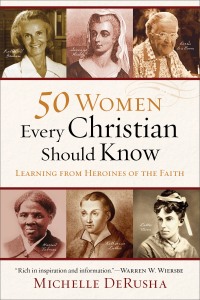
I’m welcoming author Michelle DeRusha to the blog today. She’s written two fantastic books that have received rave reviews from the majority of readers. However, today she’s writing about one reader who gave her latest book two thumb’s down. I can really relate to both sides in this post! 


“I don’t like the idea of having to spit out bones to get to the meat. This book goes on my ‘no-way’ list. It had potential, but it flopped.”

I stared at my laptop screen, digesting the words that concluded the Amazon review. I read the paragraph aloud to my husband, and we both rolled our eyes and shook our heads, irritated by the reviewer’s flippant dismissal of my book.

On one hand, I’m accustomed to dealing with negative reviews. I won’t tell you I like them or that they’re easy to swallow, but I accept that negative reviews are part of my work as a writer.

But this was different. This reviewer had not only judged my writing, she had also rejected ten of the women featured in the book. She had deemed the book a flop and those ten women unworthy of inclusion for one reason: their theology didn’t perfectly jibe with her own.

The “bones” she’d spit out were the ten Roman Catholic women featured in the compilation of fifty biographies I’d written – women including second-century nun and mystic Hildegard of Bingen and sixteenth-century mystic and author Teresa of Avila. The “meat” she deemed worthy for inclusion were the remaining 40 chapters featuring Protestant heroines of the faith.

While I was angered by the reviewer’s brusque dismissal of the Catholics in the book, I also understand where it originated. I’m not above this kind of line-drawing either. I’ve erected boundaries and declared all sorts of people misguided or just plain wrong. I do it because I’m passionate about my beliefs, and I assume the same is true of the reviewer, too. I suspect the reason she deemed women like Hildegard of Bingen and Teresa of Avila unworthy for inclusion in a book about women leaders in Christian history isn’t because she’s a hateful, close-minded person, but because she loves God and is trying to live a theologically and biblically centered life. I’ll even go so far as to say that her heart’s in the right place and that she believes she is doing the right thing.

But the truth is, an “us-versus-them, my-theology-versus-your-theology” mentality blinds us to the kind of spacious faith Jesus yearns for us to embrace.

Think for a moment about the story of Jesus and the Samaritan woman. Jesus, according to the customs and culture, shouldn’t have even engaged the woman in conversation. She was a Samaritan, after all, a member of a group traditionally abhorred by the Jews. And she was a woman, a non-citizen. And she was an immoral woman, married five times and currently living unmarried in sin. But none of this mattered to Jesus. He crossed the ethnic, religious, cultural, social and gender lines of the time without hesitation.

When the Samaritan woman challenged Jesus on who was worshipping the right way and who was worshipping the wrong way – the Jews in Jerusalem or the Samaritans at Mount Gerizim – Jesus didn’t answer her question. Instead, he turned her question on its head.

“Believe me, dear woman,” Jesus replied. “The time is coming when it will no longer matter whether you worship the Father on this mountain or in Jerusalem…the time is coming – indeed it’s here now – when true worshippers will worship the Father in spirit and truth. The Father is looking for those who will worship him that way.” (John 4:21 and 23)

Did you catch that? Jesus erased the boundary drawn by the Samaritan woman. It was not about Jerusalem versus the mountain; it was not about the Jews versus the Samaritans, or where they worshipped or even how they worshipped. None of that mattered, Jesus said.

Instead, according to Jesus, it’s who you are and the way you live that matter before God. Or, as The Message paraphrase puts it, “Your worship must engage your spirit in the pursuit of truth. That’s the kind of people the Father is looking out for: those who are simply and honestly themselves before him in worship.” (John 4:24)

Jesus erased the boundaries 2,000 years ago, and he erases the boundaries we erect today. There is no “us versus them” for Jesus; there is no right way or wrong way. What counts, Jesus says, is who we are inside – the essence of our spirits – and how we live out that spirit. Not which denomination we practice, not the particular doctrine we believe, but simply who we are and how we live and love.

Jesus doesn’t make a distinction between meat and bones, between your theology and my theology. He sees past the distinct parts and pieces to the whole entity. Because for Jesus, the meat and the bones comprise the Body of Christ. And the body isn’t whole or complete or even functional without each one of its uniquely different parts.


About Today’s Guest Blogger
closeupA Massachusetts native, Michelle DeRusha moved to Nebraska in 2001, where she discovered the Great Plains, grasshoppers the size of Cornish hens … and God. She is the author of Spiritual Misfit: A Memoir of Uneasy Faith and 50 Women Every Christian Should Know: Learning from Heroines of the Faith. Michelle writes about finding and keeping faith in the everyday at MichelleDeRusha.com, as well as a monthly column for the Lincoln Journal Star. She’s mom to two bug-loving boys, Noah and Rowan, and is married to Brad, an English professor at Doane College who reads Moby Dick for fun.